

Marine Science
Sustainable seafood sources could help close global nutrition gaps
Aquatic invertebrates are rich sources of essential nutrients and could contribute to global nutrition security if sustainably managed.


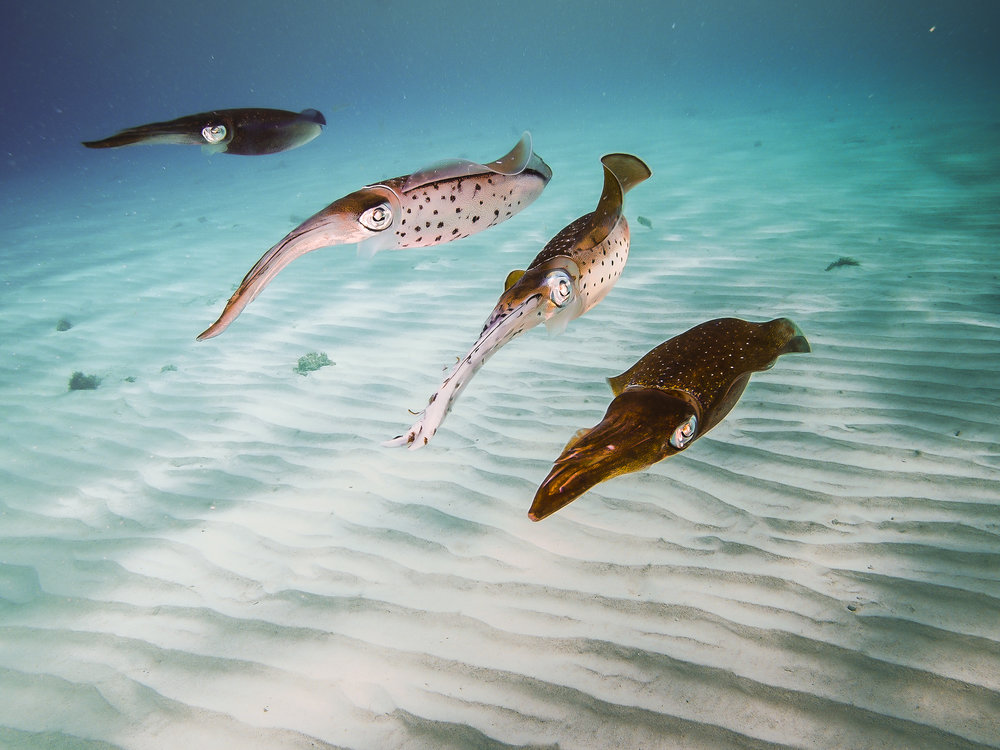
Mussels, crabs, oysters, and other aquatic invertebrates hold considerable untapped nutritional value that could be sustainably harnessed to improve global macro and micronutrient intake, according to findings by an international team including KAUST researcher Jessica Zamborain-Mason[1].
“Aquatic invertebrates are a diverse, nutrient-dense, and socio-ecologically important food, but their contribution to human nutrition is frequently overlooked,” says Zamborain-Mason. “Much of the world’s population does not consume enough micronutrients such as vitamin B12, iron, and zinc in their diets, and yet invertebrates are known to have higher nutrient concentrations than many other foods. We need to sustainably manage aquatic invertebrates to harness their full nutritional potential.”
In this study, the team assessed the potential contribution of aquatic invertebrates to 30 key nutrients for human health. They found that current global invertebrate production supplies the equivalent annual requirement for vitamin B12 and selenium for more than five billion people. For copper, omega-3 fatty acids, iodine, and zinc, current production could meet the annual requirements of one billion people, while supplies of vitamins B2 and B3, iron, manganese, and magnesium could meet the requirements of more than 100 million people.
Different species provide specific nutrients; bivalves had the highest concentration of iron, iodine, zinc, and vitamin B12, while sea urchins and sea cucumbers were rich in selenium, magnesium, manganese, and sodium. Such insights could inform public health programs targeting specific nutrient deficiencies and undernutrition in certain population groups.
“We also examined how nutrient concentrations in invertebrates vary across different body parts and processing methods. This could create opportunities to use highly nutritious parts that are not currently consumed, increasing the nutritional value of food products while reducing food waste,” says Zamborain-Mason. For example, 100 grams of dried invertebrates often have higher mineral concentrations than raw tissue.
 Aquatic foods can provide essential nutrients at relatively low cost, highlighting the need to consider nutritional value alongside sustainability when shaping fisheries and aquaculture policies. © Nicolas Job/Ocean Image Bank
The researchers then used predictive modeling to estimate and provide the nutrient composition of more than 50,000 invertebrate species found across the world.
“We integrated species-specific nutrient composition data with species-specific taxonomic and ecological traits — for example, species habitats and their size. The models use that data to understand how those variables are associated with the sampled nutrient content, and then predict nutrient composition for species where nutritional data are missing,” says Zamborain-Mason. “This is exciting because it allows ‘potential nutrition’ to become a central aspect of decision-making in harvesting and promoting produce.”
Most of these species have never been nutritionally examined before, and the results can be used to start accounting for their nutritional value in conservation, management, and policy.
“We are not suggesting that we should start harvesting vast quantities of invertebrates from aquatic environments,” says Zamborain-Mason. “Rather, our findings encourage countries and policymakers to sustainably manage them and to value aquatic foods in a different way, not simply by the volume of seafood they produce or their economic value, but by the essential nutrients they provide and their potential to improve health.”
The findings could also have implications for Saudi Arabia as the Kingdom expands domestic seafood production to enhance food security. Incorporating nutritional value into sustainable fisheries and aquaculture management could help identify opportunities to support both nutrition and sustainable seafood production.
Reference
- Zamborain-Mason, J., Marwaha, N., Yoo, S-H., Hicks, C.C., Robinson, J.P.W., Abucay, L.R., Elsler, L.G., Eurich, J.G., Friedman, W.R., Gephart, J.A., MacNeil, M.A., Mason, J.G., Deng Palomares, M.L., Parducho, V.A., Seto, K.L., Kleisner, K.M., Viana, D.F., Golden, C.D. The nutritional value of invertebrate aquatic foods. Nature (2026). | article
ABOUT THE AUTHOR
Jessica Zamborain-Mason
Assistant Professor

You might also like
Marine Science
Corals show ‘vaccine-like’ responses after pathogen exposure
Marine Science
Tracing 700 million years of cell evolution
Marine Science
Mapping movements of marine megafauna shows protection must go further
Marine Science
Red Sea coral absorbs chemical contamination
Marine Science
Buying time for coral reefs
Marine Science
Measuring spatial differences in reef-building corals to guide future management
Marine Science
Potential gains from replenishing reef fish stocks revealed
Marine Science