

Marine Science
Buying time for coral reefs
KAUST researchers are testing solutions that may shape how coral reef systems weather the century ahead.


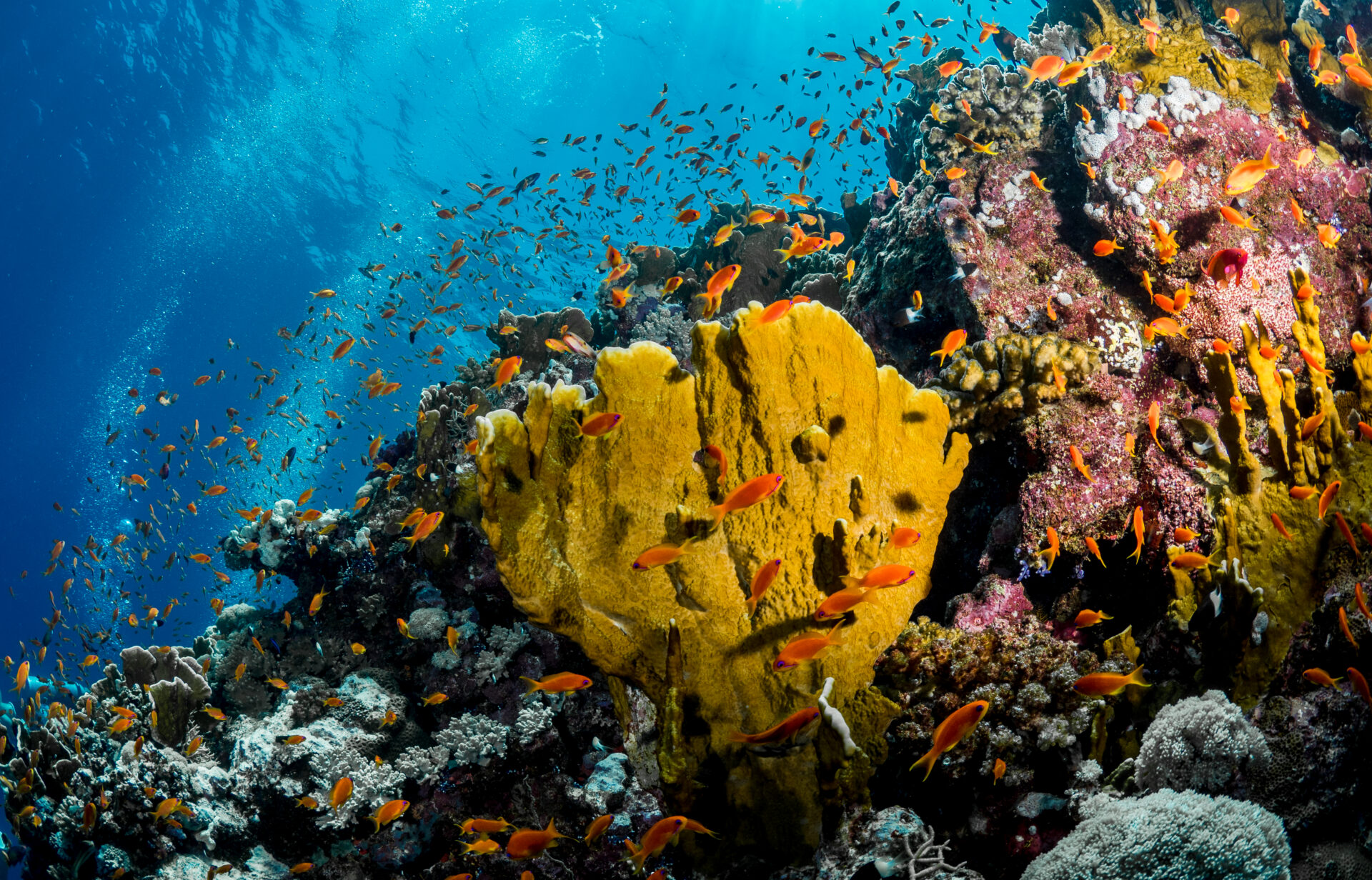
Mass bleaching events are taking their toll on coral reefs. Researchers are accelerating efforts to develop adaptation strategies that could help coral systems withstand a future where marine heat waves occur more frequently and with greater intensity.
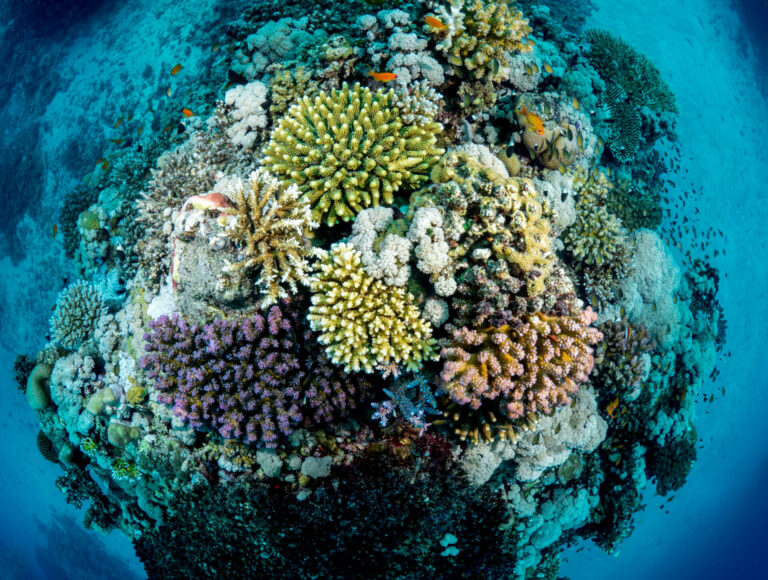
When coral reef ecosystems degrade, fish populations decline, coastlines become vulnerable to storms, and reef pathogens surge. “Think of a coral reef as a house, a restaurant, and a nursery,” says Raquel Peixoto, chair of the Marine Science Program at KAUST. “A diverse range of species need the reef to feed and reproduce, and coastal communities rely on them too.”
As marine heatwaves intensify, the Red Sea, already warmer than most global seas, offers a unique opportunity to study how coral reef ecosystems function under stress. “As a kind of time machine, it shows us how other reefs may look when their waters warm,” Peixoto says. “Researchers from elsewhere can tailor this knowledge for other reef systems.”
A cocktail of good bacteria
Corals are not solitary organisms but exist in symbiotic relationships with diverse microbial communities. In healthy reefs, these beneficial microbes play protective roles. They prevent disease, support nutrition, and help corals regulate their response to stress.
During a heatwave, the heat-sensitive beneficial bacteria are replaced by opportunistic pathogens that thrive under stress. By the time a coral bleaches, the microbial collapse is already underway.
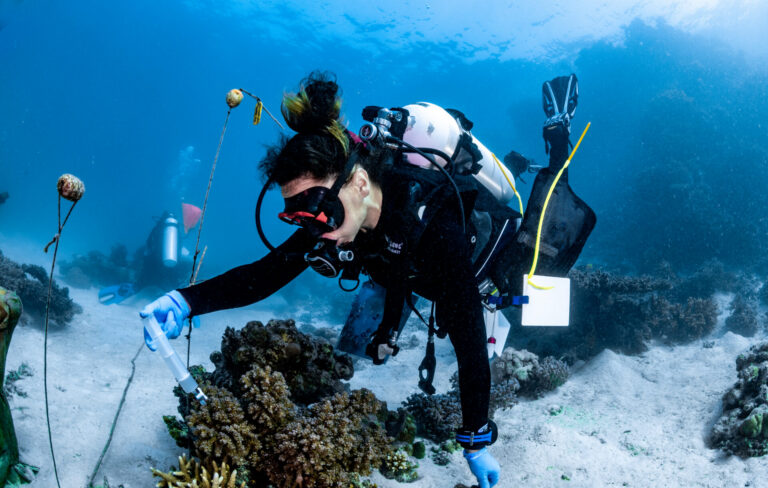
Peixoto’s solution is to intervene just before or during heatwaves. Her team isolates selected strains of beneficial bacteria from healthy corals under stable conditions, then reintroduces these native microbes to stressed corals during heat events. “We combine a cocktail of good bacteria that are sensitive to warmer temperatures and then we put them back. We don’t manipulate or change the genes, and we don’t introduce anything that is not native, we just restore the good ones,” she explains.
After five years of experimentation in the field, Peixoto’s team has demonstrated that probiotics enhance coral health and do not harm other reef organisms, but instead improve survival across the ecosystem.
Reefs treated with the probiotic retained 60 percent of their baseline cryptobenthic biodiversity after a heat wave, while untreated reefs retained 20 percent. For Peixoto, these numbers make a strong case for broad reef protection based on coral survival, and highlight the potential long-term indirect effects of probiotics. “Dead corals don’t adapt. If we keep them alive, they have a chance to adapt.”
While she highlights that this approach alone will not save coral reefs, strategic interventions can buy time for corals as researchers develop a broader range of solutions.
The pink rocks nobody studies
Maggie Johnson grew up on the coast of the northeast United States, near an ocean too cold to snorkel in. A university field ecology course took her to the Caribbean and set her future direction. “I’m very visual in how I learn. Ecology just made so much sense to me. Everything kind of clicked into place,” she explains.
That visual instinct shapes the direction of her work. At KAUST, Johnson studies crustose coralline algae (CCA), the ‘pink rocks’ that are usually overlooked.
“These are the unsung architects of the reef,” Johnson explains. “You can think about the corals as the bricks and CCA as the glue that’s holding all those fragments together.”
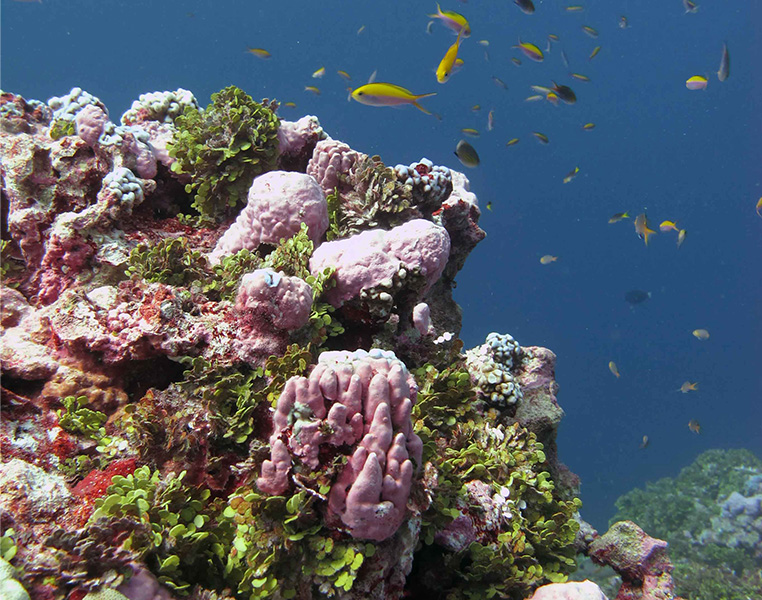
CCA build a stony skeleton of calcium carbonate and act as a cement binding the reef to withstand waves and storms, creating microhabitats for small marine life, and providing chemical cues that attract coral larvae to settle and grow.
Identifying CCA is challenging, as they closely resemble rocks and require microscopic analysis and specialized expertise, Johnson explains. Being hard to study and not, as she puts it, ‘as charismatic as a coral’, they are consistently overlooked even by researchers.
The Red Sea has a unique assemblage of CCA that appears to have higher thermal tolerance than populations elsewhere. However, tolerance has limits. Following the 2023 and 2024 marine heatwaves, Johnson’s team began recording CCA bleaching and disease events across Red Sea reefs at a scale and severity not previously documented in the region. “We now see it so often and it’s something we can’t ignore,” she says of the disease.
The concern is that CCA are already operating close to their upper thermal limits in the Red Sea. A reef that loses its CCA will lose a key mechanism that supports coral recruitment and recovery.
Johnson’s goal is to embed CCA in the monitoring frameworks that reef scientists and managers rely on so the ‘glue’ is tracked alongside the ‘bricks’. “Corals can’t exist on their own,” she says. “We can direct attention, research effort, and funding towards the corals themselves, but we also need to understand the other players. By supporting them, we support the entire ecosystem.”
Finding order from chaos
When Charles Darwin first mapped coral reefs in the 1840s, he dropped a rope over the side of a ship and measured depth by hand. For nearly two centuries, reef science worked with the same constraint: you could only know what you could physically reach and measure.
David Suggett is trying to change that. As the Director of the KAUST Coral Restoration Initiative (KCRI), his team is building a coral reef digital twin, a computational replica of a living reef, updated in real time. “This is a fully functional replica of a coral reef. So it is the first of its kind, not just how it looks, but how it functions,” says Suggett. The digital twin is built from high-resolution underwater photogrammetry, real-time sensor data, and ecological models trained on machine learning.
Suggett says the digital twin helps us find order out of chaos. The practical value of the platform is to raise probabilistic questions to think through how different decisions can influence a system as complex as a coral reef.
For example, “if we planted coral here, is this going to be a positive or a negative thing for the resulting ecology in the next five to 10 years? Or if we see a heat stress event in this space, can we even recover from it, or do we need to think about putting our efforts elsewhere on the reef?” Suggett explains.
The decision-making system is now operational, with all components feeding into a common data platform. The tools and methodologies developed at the 100-hectare scale are designed to be transferable, simplified into components that smaller, lower-resourced restoration projects can adopt. “Our project was never intended to be widely replicated,” Suggett says. “It was designed to catalyze new approaches and develop practical solutions for reef restoration.”
Besides restoring reefs and advancing the science, KCRI’s third goal is to develop a marine industry in the Kingdom; training Saudi graduates, transferring expertise, and ensuring that knowledge generated locally remains in the Kingdom. “We know the marine economy is growing. Ensuring this industry benefits Saudis beyond our immediate goals is a really important outcome,” Suggett concludes.
Feeding the Future
The health of coral reefs also has direct implications for food security and human nutrition. Jessica Zamborain-Mason spent part of her Ph.D. fieldwork on the islands of Papua New Guinea, monitoring reef fish catches to assess their sustainability. She watched mothers head out each morning to fish, while their children stayed behind, waiting for them to return with a nourishing catch..
“If the mother came back with fish, they ate rice and fish that night. If she didn’t, they often only had rice,” she explains. This observation influenced her research focus: “Reef fisheries are critical for food and nutrition security, yet they are often managed without accounting for these metrics,” argues Zamborain-Mason.
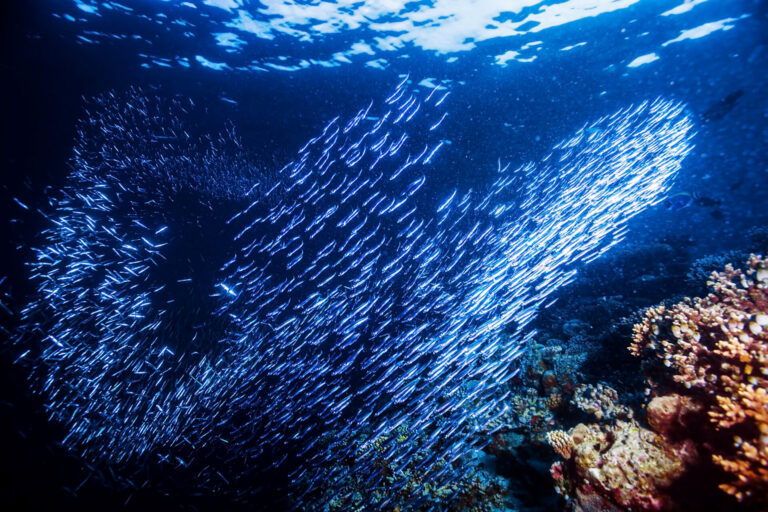
Fish volumes often dominate every target and policy framework across the globe, while nutrition is rarely considered. “We can fish smarter, rather than harder,” she says. Different species carry different micronutrient profiles; some are rich in iron, zinc, or essential fatty acids, while others have relatively less nutrients. “We need to account for these synergies and trade-offs to fish smarter,” notes Zamborain-Mason.
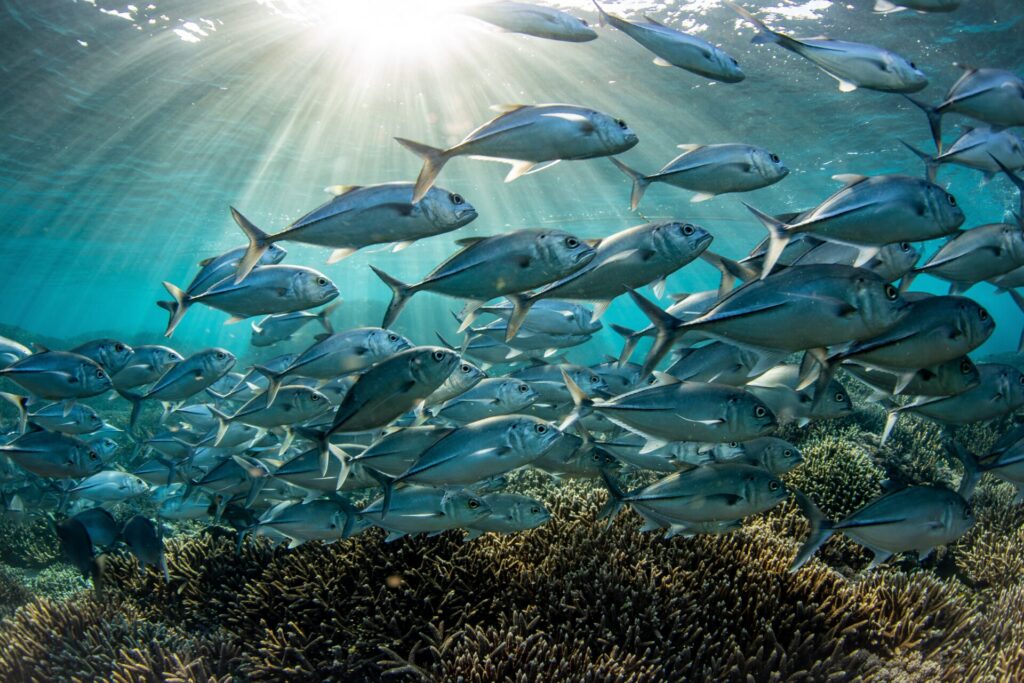
More than 60 percent of coral reefs globally are currently overfished, highlighting a significant gap between what they deliver now and what they could deliver under sustainable, nutrition-sensitive management.
Bringing overfished reefs back to sustainable levels offers a pathway to increase food security and human health. However, this requires careful evaluation, as reducing fishing pressure in the short term could have its own food security costs.
Zamborain-Mason is realistic about this. “We need to monitor fisheries and adapt our frameworks as species compositions change with ongoing climate change. No matter how ecosystems evolve, people still rely on fisheries for food security and human health,” she says,” she says.
Saudi Arabia is well positioned to close this gap, Zamborain-Mason believes. The local catch is dominated by nutritionally distinctive reef species and well-managed reef fisheries can enhance local food production. Furthermore, the country carries documented burdens of micronutrient deficiencies and cardiovascular diseases, all of which could be improved through responsible aquatic food consumption. Existing coast guard systems can also provide the monitoring needed for an effective national fisheries framework.
“If you compare it to other coral reef systems around the globe, the Kingdom has an opportunity to serve as a positive example on how to effectively and sustainably manage reef fisheries in the context of climate change,” Zamborain-Mason concludes.
The work ahead
KAUST’s location, adjacent to the warm waters of the Red Sea, gives researchers direct access to study how other coral reefs may respond to future conditions. The research conducted at KAUST has local relevance, but its implications extend far beyond the Kingdom.
These complex ecosystems are interconnected with human systems and are under stress across multiple dimensions, including microbial, structural, ecological, nutritional, and economic integrity.
Peixoto says the focus has shifted beyond whether restoration is necessary. “We are now asking how, where, and with what tools,” she says.
You might also like
Marine Science
Sustainable seafood sources could help close global nutrition gaps
Marine Science
Corals show ‘vaccine-like’ responses after pathogen exposure
Marine Science
Tracing 700 million years of cell evolution
Marine Science
Mapping movements of marine megafauna shows protection must go further
Marine Science
Red Sea coral absorbs chemical contamination
Marine Science
Measuring spatial differences in reef-building corals to guide future management
Marine Science
Potential gains from replenishing reef fish stocks revealed
Marine Science