

Marine Science
Reef-building coral shows signs of enhanced heat tolerance
Heat tolerance is being conferred naturally down the generations of a common reef-building coral in response to recent marine heatwaves.


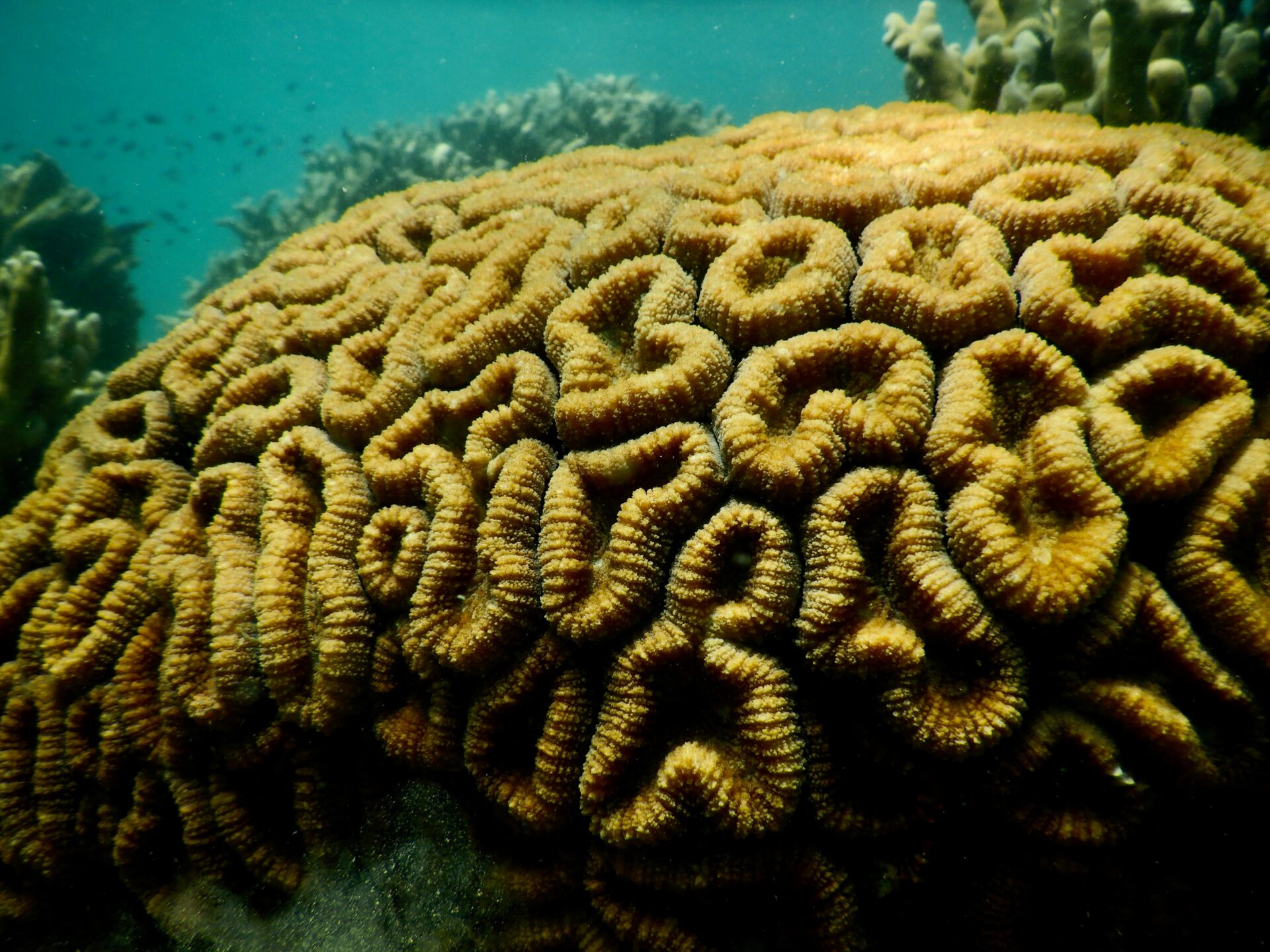
With the decline of coral reefs well-documented, there is now evidence of heat tolerance being conferred in a common reef-building coral. This finding is helping scientists to understand if, and how, corals may be adapting naturally to rising ocean temperatures driven by global warming.
An international team has demonstrated that heritable genetic variation for heat tolerance is more widespread than previously thought in the reef-building coral Platygyra daedalea[1]. The pressure of more regular marine heatwaves appears to be enhancing the selection of gene variants to help the coral to withstand higher temperatures.
“We urgently need to understand whether corals can adapt quickly enough to keep pace with climate change and, if so, how they might do this,” says Manuel Aranda from KAUST, who led the project alongside Emily Howells from Southern Cross University in Australia. “This knowledge is essential to guide conservation strategies and prioritize interventions in coral reefs while there is still time to act.”
P. daedalea is broadly distributed across the Indo-Pacific, including in the Red Sea and Arabian Gulf, which are among the world’s hottest reef environments. This makes it an ideal coral to study both for adaptation to extreme heat and for the potential for gene flow between populations.
In this ambitious project, the team combined large-scale quantitative breeding experiments across ten populations of P. daedalea, collected from six ocean regions.
“The greatest challenge was logistical, conducting controlled coral breeding and heat-stress experiments across multiple locations,” explains Aranda. “This coral species spawns only once a year for just a few nights, so our teams needed to be in the right place at the right time, often under challenging field conditions.”
The proximity of KAUST to the Red Sea allowed the scientists to collect and breed corals from populations known for their thermal tolerance.
“This breadth of sampling allowed us to directly assess heritable variation in heat tolerance at local and global scales,” notes Aranda. “Understanding the limits of coral heat tolerance, and the genetic basis of that tolerance, also tells us whether corals retain sufficient genetic variation to continue adapting in the future.”
The team subjected the coral to water of different temperatures in the lab, and monitored the resulting survival and settlement of coral larvae. They used specific breeding designs that allowed for trait selection, and genomic analyses to disentangle genetic from environmental effects. The results indicate that some coral populations possess heritable variation in heat tolerance, shaped by the history of heatwave exposure in each region.
According to Aranda, this suggests that corals are already adapting to warming oceans. “However, this adaptive potential is being depleted in the most thermally extreme environments, which may limit future adaptation. This finding is crucial because it highlights both hope and urgency for conservation actions,” he adds.
Aranda urges caution when it comes to engineering corals, because heat tolerance is a finely balanced trait that involves many genes. Conservation strategies should instead focus on preserving genetic diversity in reefs to maintain their evolutionary potential. The team suggests it may one day be possible to boost reef systems with naturally heat-tolerant genotypes.
In the next phase of the project, the researchers will apply high-throughput genotyping (ezRAD sequencing) to link genetic variation with thermal tolerance. This will allow them to determine how heat tolerance genes are passed down through generations, and to identify the genetic markers under selection.
Reference
- Howells, E.J., Abrego, D., Schmidt-Roach, S., Puill-Stephan, E., Denis, H., Harii, S., Bay, L.K., Burt, J.A., Monro, K. & Aranda, M. Marine heatwaves select for thermal tolerance in a reef-building coral. Nature Climate Change 15, 829-832 (2025).| article
ABOUT THE AUTHOR
Manuel Aranda
Professor

You might also like
Marine Science
Extreme heat leaves corals short of oxygen
Marine Science
Sustainable seafood sources could help close global nutrition gaps
Marine Science
Corals show ‘vaccine-like’ responses after pathogen exposure
Marine Science
Tracing 700 million years of cell evolution
Marine Science
Mapping movements of marine megafauna shows protection must go further
Marine Science
Red Sea coral absorbs chemical contamination
Marine Science
Buying time for coral reefs
Marine Science