

Marine Science
Measuring spatial differences in reef-building corals to guide future management
Data collected at a pivotal time provide baseline information for coral reef resilience and management in the northeastern and central Red Sea.


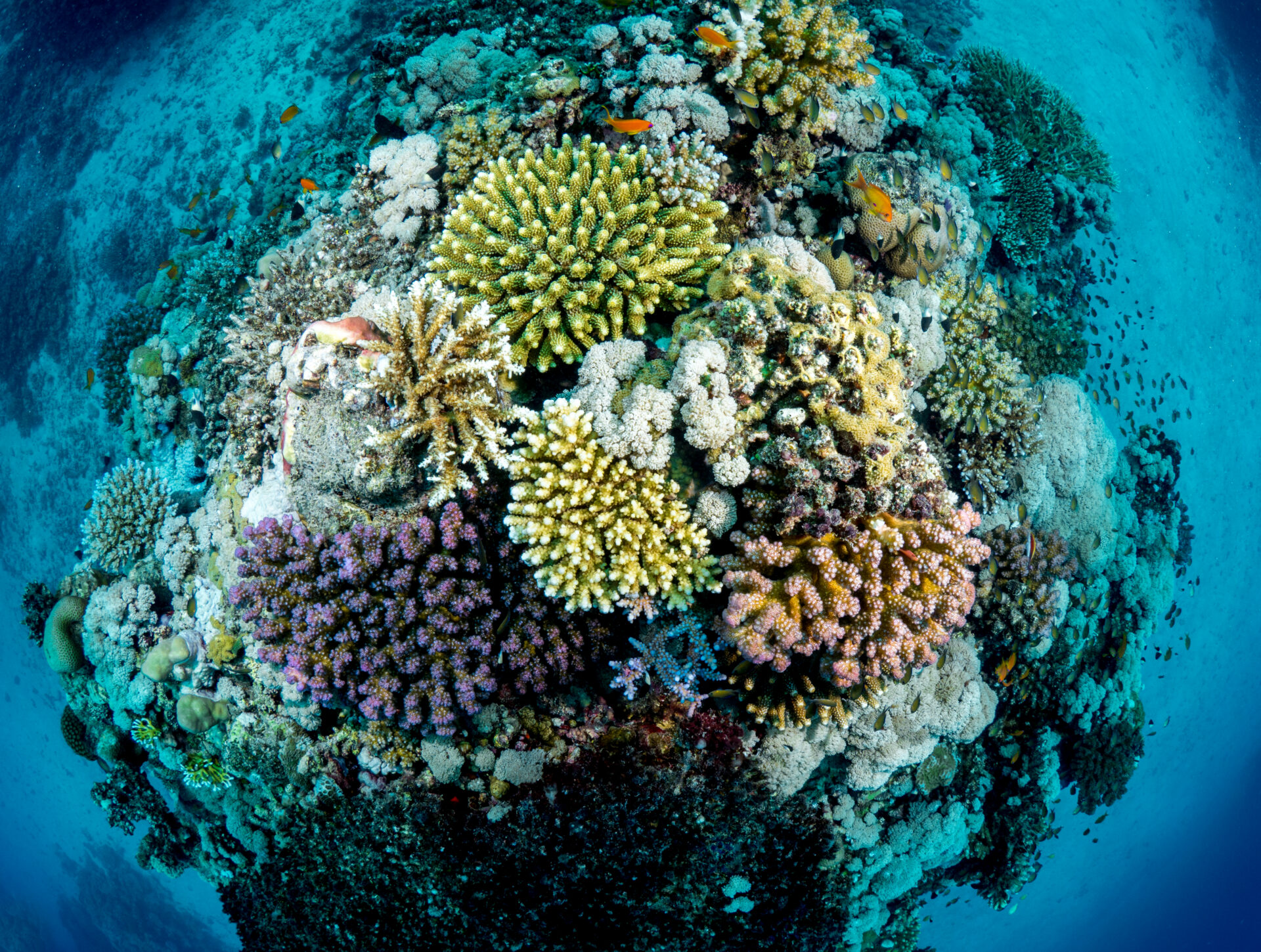
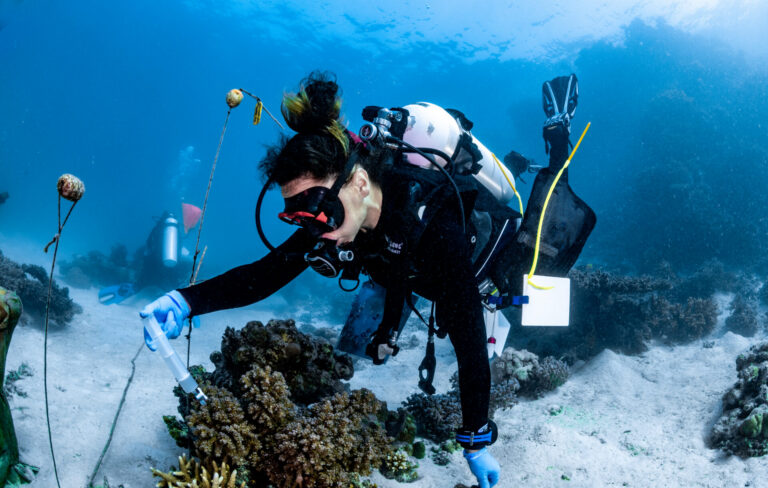
Coral reefs differ widely in the types of corals they host, how their populations are structured, and the extent of coral cover. These differences are influenced by environmental and biological factors, from local conditions to regional climate patterns. Now, KAUST researchers have determined baselines in spatial variability for eight reefs in the northeastern and central Red Sea, providing vital information for future management and conservation efforts[1].
“This study was conducted at a critical moment for coral reefs,” says Chiara Pisapia, who worked on the study with colleagues Eslam Osman and Maggie Johnson.
“Data was collected from November 2023 to January 2024, between two back-to-back mass bleaching events,” continues Pisapia. “These timely datasets will help scientists assess how much change, loss, or recovery follows subsequent bleaching events. This will improve understanding of the long-term consequences of climate stress on coral reefs.”
Latitudinal differences in temperature and salinity, together with factors such as nutrient availability, light levels, water quality and fishing pressures, all combine to determine the success of coral communities in different regions.
The team investigated spatial differences in coral cover, taxonomic composition and demographic structure in three common reef-building coral genera: Acropora, massive Porites and Pocillopora. They surveyed five reefs in the northeastern Red Sea, which is cooler and less saline than southern and central regions, and compared the data to those gathered at three reefs in the central Red Sea.
“This study goes beyond traditional reef surveys that focus mainly on coral cover. It’s one of the first studies in the Red Sea to directly compare coral population demography, including both adults and juveniles, across different reef habitats and large spatial gradients,” says Pisapia. “This meant we could identify how well populations are structured to recover in the future, which is essential for understanding resilience.”
Their findings showed pronounced spatial differences, not just between latitudes but also between reef habitats (the reef crest and reef slope). Specifically, northern reefs have high live coral cover – almost double the amount relative to the central reefs at the time the surveys were conducted.
“Coral populations are not uniform, and there were substantial differences in coral assemblages across regions and habitats in these reefs,” says Pisapia. “This highlights the sensitivity of coral populations to environmental gradients and disturbance history. It is vital that scientists include spatial context when evaluating reef condition.”
The team’s discovery highlights the need for conservation and management strategies that are specifically tailored to each habitat type and region.
“Some reefs, or specific reef habitats, may be better positioned to recover from climate disturbances than others,” says Johnson. “This information can help managers prioritize protection, restoration, and monitoring efforts where they are likely to be most effective. It’s only with pivotal data like those collected by Pisapia that we can evaluate the true effect of environmental change on Saudi Arabia’s coral reefs.”
Pisapia plans to revisit these sites to track how coral populations change through time as disturbances continue to intensify, and assess which reefs are most likely to persist.
The study was supported by the Ocean Science and Solutions Applied Research Institute (OSSARI) awarded to Pisapia and Osman, and a National Geographic Society Award granted to Osman.
Reference
- Pisapia, C., Osman, E.O., & Johnson, M.D. Spatial variability in coral assemblages in the northeastern and central Red Sea. Marine Pollution Bulletin 223 (119050) (2026).| article.
ABOUT THE AUTHOR
Chiara Pisapia

You might also like
Marine Science
Sustainable seafood sources could help close global nutrition gaps
Marine Science
Corals show ‘vaccine-like’ responses after pathogen exposure
Marine Science
Tracing 700 million years of cell evolution
Marine Science
Mapping movements of marine megafauna shows protection must go further
Marine Science
Red Sea coral absorbs chemical contamination
Marine Science
Buying time for coral reefs
Marine Science
Potential gains from replenishing reef fish stocks revealed
Marine Science