

Marine Science
AI reveals the universal beauty of coral reef growth
A study of global coral reef distributions reveals that reefs exhibit universal spatial properties conforming to mathematical power laws.


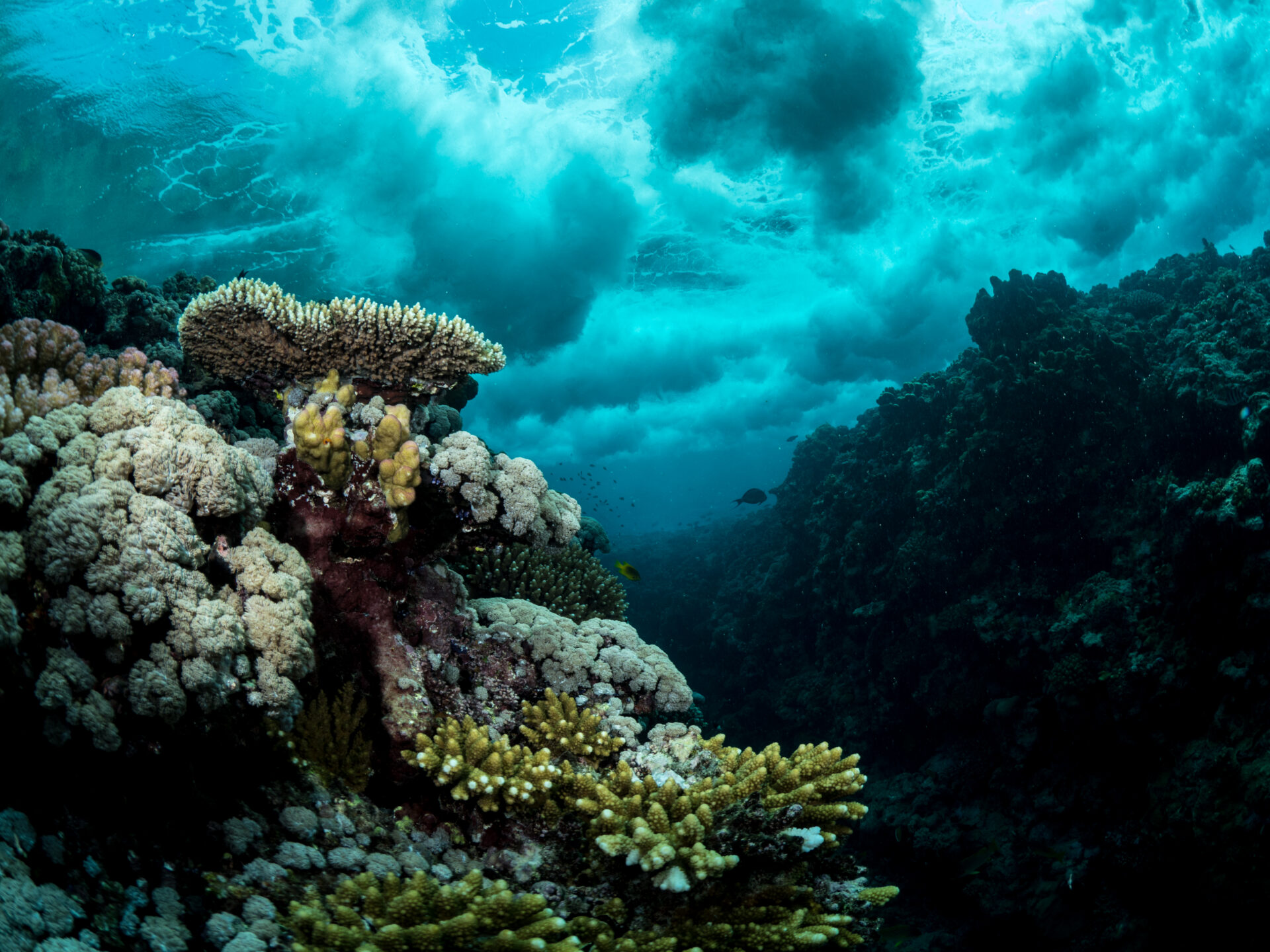
“The first global-level assessment of the number, size and properties of shallow-water tropical coral reefs suggest that restoration is more achievable than previously thought,” suggests KAUST faculty and marine ecologist, Carlos M. Duarte
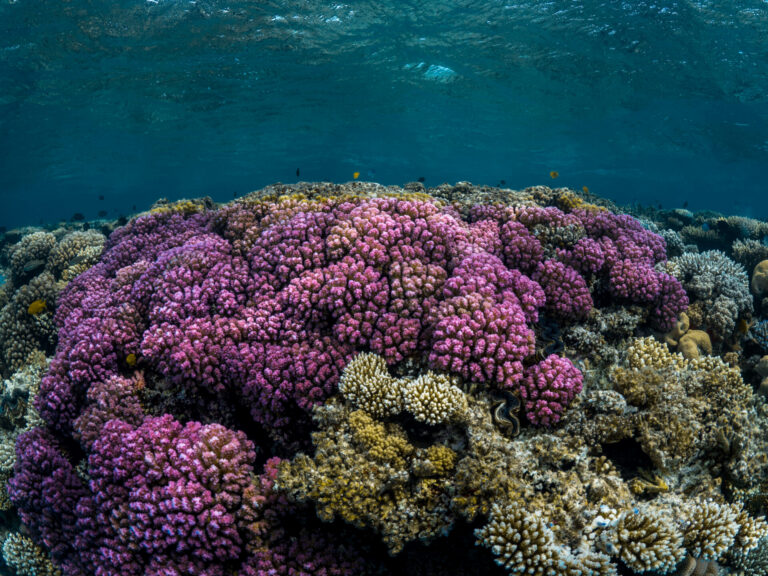
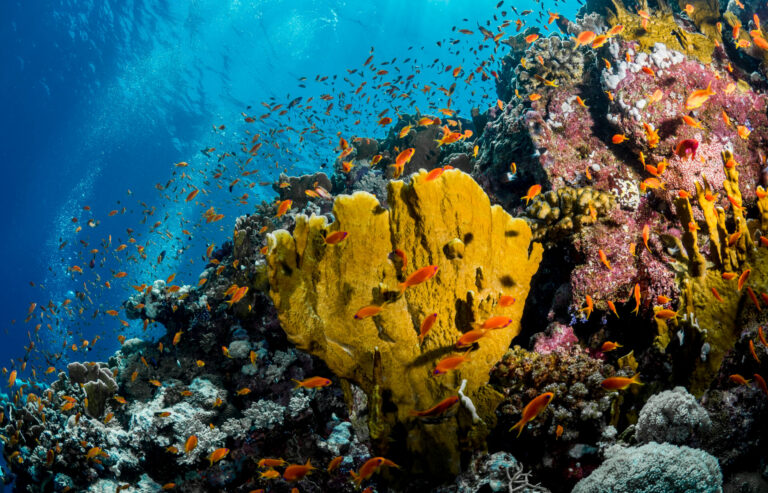
Tropical coral reefs form some of the largest living structures on Earth, offering shelter and sustenance to numerous marine creatures, and providing livelihoods and food to coastal communities. However, these essential marine ecosystems are facing significant damage and degradation due to climate change and human activities.
The Kunming-Montreal Global Biodiversity Framework aims to halt and reverse global biodiversity loss by 2030, but scientists have been missing vital fundamental data on coral reefs that would enable viable restoration and protection projects to get underway.
“Where exactly are tropical coral reefs located? How large are they? What spatial patterns do they exhibit and why?” asks Duarte.
To answer these questions, Duarte has teamed up with scientists Alex Giménez-Romero and Manuel Matias at the Institute of Cross-Disciplinary Physics and Complex Systems (IFISC, UIB-SCIC) in Spain, to conduct an AI-based analysis of the vast Allen Coral Atlas database[1]. The Allen Coral Atlas comprises hundreds of thousands of satellite images, gathered by the Planet satellites, which are then classified by AI to identify precise coral reef habitats from space.
However, it has been cumbersome to extract reef-specific information from the images. So Duarte and co-workers have used AI to identify individual reefs across the entire Atlas, and retrieve location, size, and shape for each of the reefs to examine their collective properties.
The team reports on 1.5 million coral reefs covering a total area of more than 50,000 km2. Their analysis reveals that the spatial geometries of reefs follow three universal scaling laws, or ‘power laws’; in other words, reef growth and distribution follow the scaling and fractal patterns of the Fibonacci sequence.
“Fibonacci series are prevalent across nature, such as fern fronds that form spiral-like features, and even in the shape of the bubble ‘curtains’ that humpback whales produce during hunting,” says Duarte. “To see these scaling patterns replicated in coral reef geometries as seen from space is really exciting.”
The team showed that the size-frequency distribution, the inter-reef distance distribution and the area-perimeter relationship of each reef all follow power laws. Reefs tend to evolve from simple rounded shapes to become more complex, elongated and less compact as they grow. Their fractal geometries emerge with age, and these same patterns are replicated across the globe, regardless of location.
“These universal patterns hint at the nature of the biological and chemical processes driving the shape of coral reefs,” says Duarte. “To support marine biodiversity, the more complex and intricate the structures the better. These are important insights for guiding the morphology of restored reefs; they also provide specific constraints to test reef models.”
The team found that the characteristic (median) size of a coral reef is 0.3 hectares. This suggests that, to achieve global biodiversity goals, the area that needs to be restored in each reef is a maximum of a few hundred square meters.
“Such relatively small areas could be restored, even with limited resources and time, by custodians and citizens committed to individual reefs” says Duarte. “Our paper brings coral reef conservation and restoration to the human scale. It may be feasible for us to reverse the damage we’ve done to these truly beautiful, vital ecosystems.”
Reference
- Giménez -Romero, A., Matias, M.A. & Duarte, C.M. Unravelling the universal spatial properties of coral reefs. Global Ecology and Biogeography 0:e13939 (2024).| article
ABOUT THE AUTHOR
Carlos Duarte
Ibn Sina Distinguished Professor

You might also like
Marine Science
Extreme heat leaves corals short of oxygen
Marine Science
Sustainable seafood sources could help close global nutrition gaps
Marine Science
Corals show ‘vaccine-like’ responses after pathogen exposure
Marine Science
Tracing 700 million years of cell evolution
Marine Science
Mapping movements of marine megafauna shows protection must go further
Marine Science
Red Sea coral absorbs chemical contamination
Marine Science
Buying time for coral reefs
Marine Science