

Marine Science
Extreme heat leaves corals short of oxygen
When exposed to acute heat stress, corals can suffocate, rapidly losing their tissue before showing the familiar signs of bleaching.


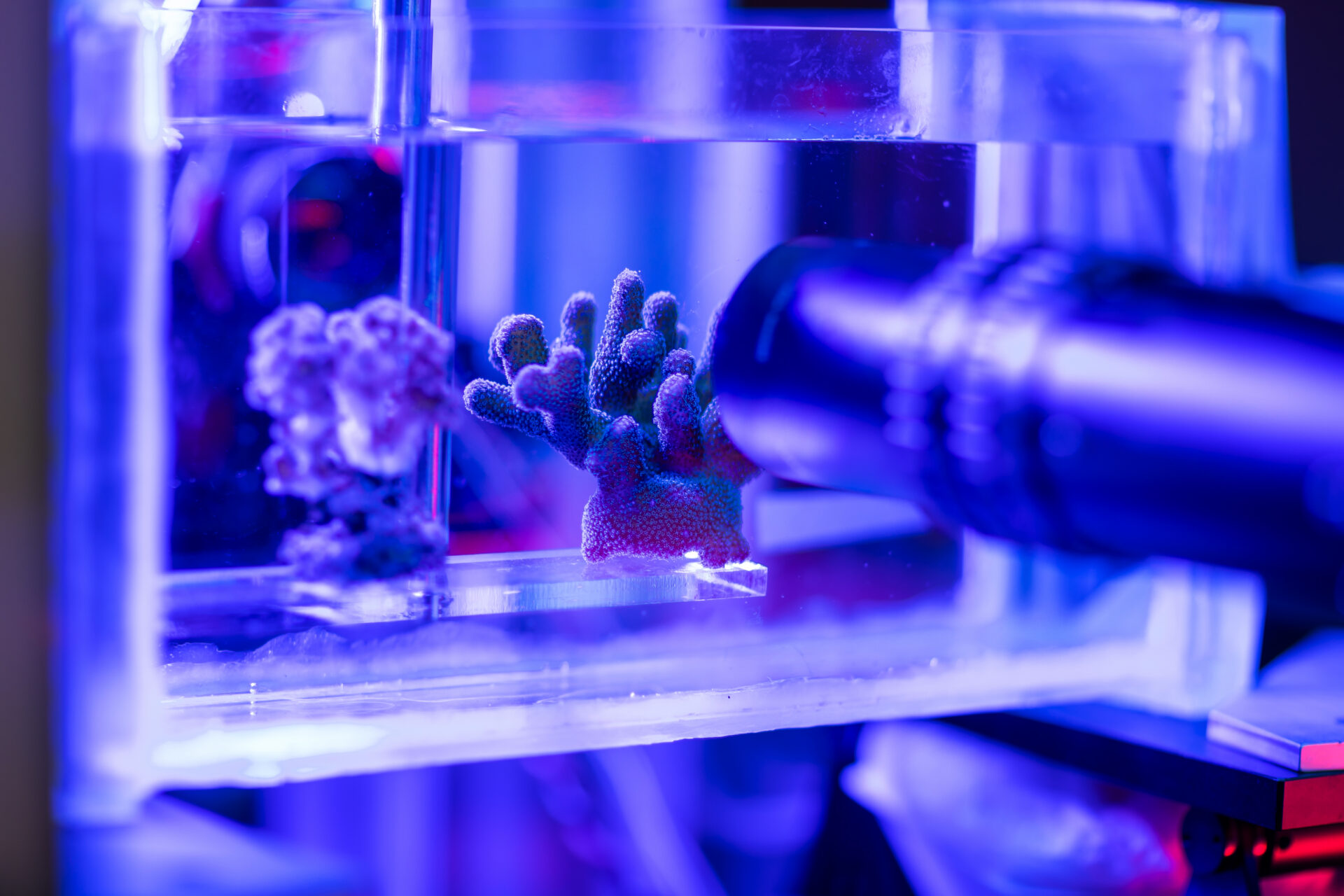
- Bleaching, a common response to heat stress, typically unfolds gradually as a coral progressively loses the algae living in its tissues. These algae provide food and oxygen through photosynthesis. A bleached coral can remain alive for months and may recover if conditions improve.
- Under extreme heat stress, coral tissue can instead break down and detach from its skeleton within hours to days, before bleaching occurs. Once this happens, the coral cannot recover.
- A KAUST-led study published in Global Change Biology suggests that this rapid decline may begin when heat severely impairs algal photosynthesis, reducing oxygen production while increasing the coral’s need for oxygen [1].
What happens when coral overheats?
Rapid coral mortality and tissue disintegration in heat-stressed corals attracted wider attention following observations on Australia’s Great Barrier Reef during the 2014–2017 global bleaching event and during the 2023 heatwaves in the Caribbean and eastern tropical Pacific. But what was happening inside the corals remained unclear.
To understand how and why corals may die before bleaching, a KAUST-led team examined whether extreme heat could leave them short of oxygen.
In laboratory experiments, the researchers used microsensors to measure oxygen in the thin layer of water directly next to the tissues of corals exposed to acute heat stress. Oxygen levels fell rapidly immediately before the tissue began to disintegrate. Experiments involving corals from the Red Sea and Australia showed that rapid mortality and tissue disintegration were not limited to one species or region.
The measurements and calculations suggest that an imbalance between oxygen supply and demand can create an internal oxygen crisis, leaving the coral without enough oxygen to sustain its tissues. This shortage could contribute to rapid tissue breakdown and death.
Why does the difference from bleaching matter?
Bleaching is a visible sign of stress, but a bleached coral can still be alive, and there is still a route to recovery. Rapid tissue disintegration presents a more immediate danger: by the time it is visible, the tissue has already been lost.
The research points to oxygen conditions near and within the coral tissue as a potential indicator of vulnerability to extreme heat, and to stronger water flow around corals as a factor that may delay tissue disintegration and mortality during heat stress.
Faster water flow thins the relatively still layer of water next to the coral, helping oxygen from the surrounding seawater reach the coral tissues.
“We found that introducing stronger flow can compress the boundary layer of water around corals, improving oxygen availability and delaying coral mortality,” says Max Dhillon, a postdoctoral researcher and co-lead of the study.
This helps explain why corals in well-flushed, high-flow reef environments often survive heat stress better than those in stagnant waters.
“The impacts of marine heatwaves are often assessed through temperature and bleaching, but our findings show that these measures alone may overlook the processes that drive rapid coral mortality,” explains Shannon Klein, a research scientist at KAUST who co-led the study.
Understanding how oxygen availability and water flow influence survival could fundamentally change how we identify vulnerable reef areas and forecast particularly severe events.
For Manuel Aranda, KAUST professor of marine science and co-corresponding author of the study, these findings also point to potential applications in reef conservation and restoration, from prioritising high-flow reef sites to developing interventions that alleviate oxygen depletion.
“Now that we know this, we can refine reef conservation and restoration strategies. This includes prioritizing or creating high-flow reef sites and targeting interventions that alleviate oxygen depletion,” Aranda concludes.
Reference
- Dhillon, M.S., Klein, S.G., Maity, D.K., Parry, A.J., Moret, A., Dellisanti, W., Kushwaha, A.K., Dighe, S., Pacherres, C.O., Kühl, M., Truscott, T., Duarte, C.M., Aranda. M. Oxygen Deprivation Implicated in Rapid Coral Mortality Under Acute Heating Events. Global Change Biology 32, e71030 (2026). | article
You might also like
Marine Science
Sustainable seafood sources could help close global nutrition gaps
Marine Science
Corals show ‘vaccine-like’ responses after pathogen exposure
Marine Science
Tracing 700 million years of cell evolution
Marine Science
Mapping movements of marine megafauna shows protection must go further
Marine Science
Red Sea coral absorbs chemical contamination
Marine Science
Buying time for coral reefs
Marine Science
Measuring spatial differences in reef-building corals to guide future management
Marine Science