

Marine Science
Tracing 700 million years of cell evolution
A new AI tool helps identify hidden similarities across distant species.


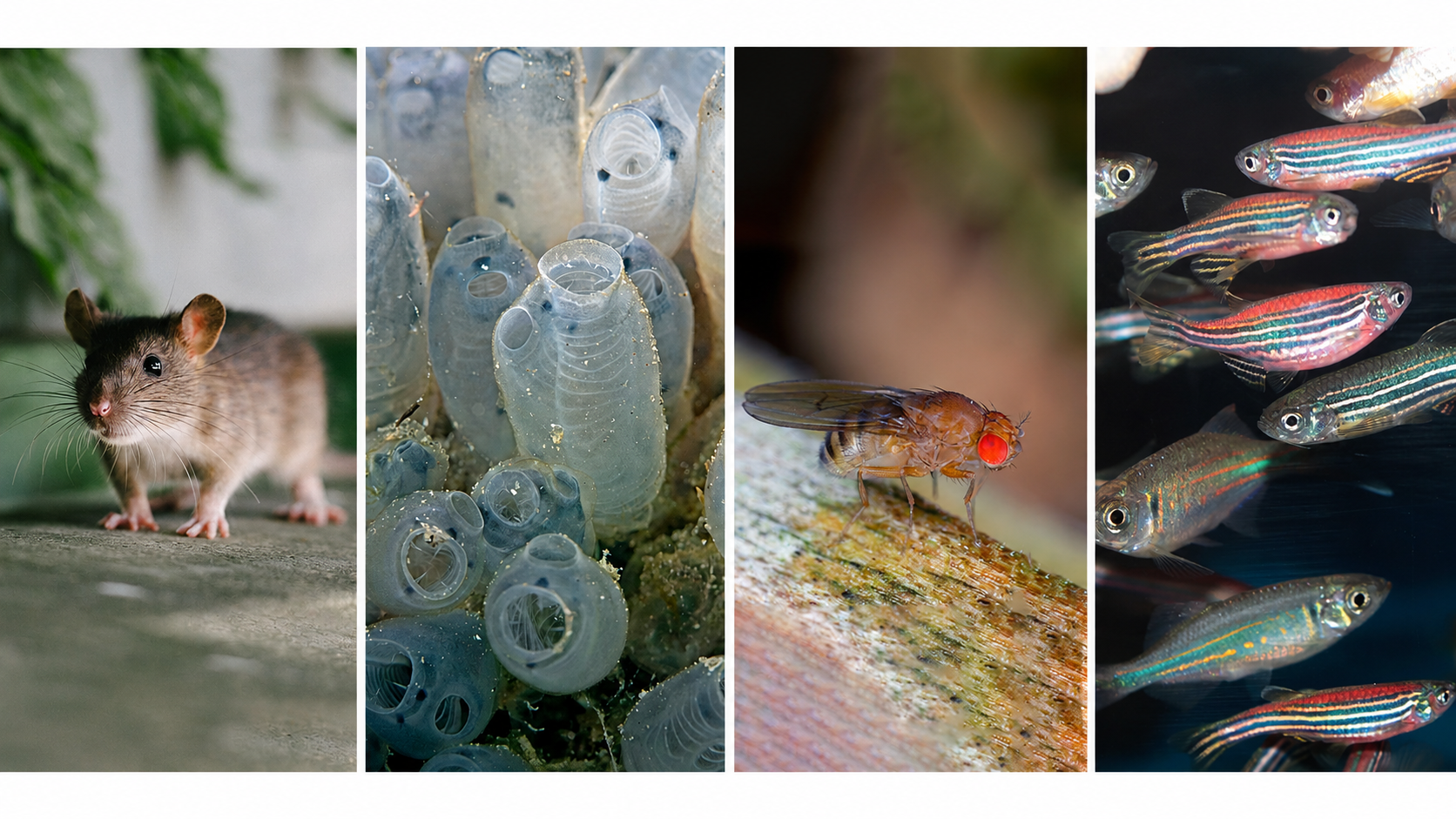
Publishing in Nature Communications, a KAUST-led team has developed the AI tool Unify to help scientists compare similar cell types across distant species[1]. This comparison can help researchers assess which findings from animal studies may be most relevant to human health.
- Cells from humans, mice, fish, flies, or worms can perform similar biological functions, even when the genes behind those functions have changed over millennia.
- Unify connected 125 cell types across more than 700 million years of evolution.
- By accounting for evolutionary changes in genes, scientists determine which animal discoveries apply to human health research.
Why do traditional genetic tools struggle to compare distant species?
Scientists often compare cells using single-cell RNA sequencing, which shows which genes are active in each cell. When carried out across an organism, this information can be used to build a “cell tree”, mapping different cell types and their activity.
However, most comparison tools rely on direct one-to-one gene matches. These matches become harder to find as species diverge over time, meaning important biological similarities (for example, between immune cells in humans and mice, or neurons in fish and flies) may be missed.
How can AI reveal similarities between cells separated by evolution?
To overcome these limitations, Unify compares the jobs that genes perform. Where conventional methods resemble dictionaries seeking word-for-word translations, this tool looks for shared biological meaning.
“Unify works with AI models that analyze protein sequences and scientific descriptions of gene functions,” explains Huawen Zhong, lead author and computational biologist at KAUST. “Genes with certain similarities are grouped into units called ‘macrogenes’. This allows Unify to recognize cells performing similar jobs, even when their individual genes no longer match.”
What hidden genetic relationships did Unify uncover?
Unify reconstructed relationships among 125 cell types from seven species separated by more than 700 million years. It distinguished between identical genes, similar genes that had evolved new jobs, and different genes that had evolved independently to do the same job.
By analyzing immune cells across multiple species, Unify identified shared defense tactics that would be difficult to detect using methods restricted to direct gene comparison. In another experiment, it predicted the response of human blood cells to a certain immune-signaling protein, based on the response of mouse lymph-node immune cells. Across all genes, Unify’s predictions were more accurate than existing methods.
What are the next steps in mapping cell evolution?
The KAUST team is now extending Unify to include information about gene regulation and cell positions within tissues. These additions will give researchers a fuller picture of the biological principles shared across life, informing further advances in human health research.
By combining biological knowledge with AI, Unify can identify patterns at a scale that would take researchers far longer to find through gene-by-gene comparisons. Its impact is summed up by KAUST Professor of Marine Science Manuel Aranda, “A lot of what we know about human biology comes from studying animals like mice, but it is not always clear which findings carry over. Unify helps us identify which discoveries in model organisms are most likely to be relevant to humans, so research can be focused where it is most useful for understanding human health and disease.”
Reference
- Zhong, H., Han, W., Cui, G. et al. Unify learns cellular evolution with universal multimodal embeddings. Nat Commun17, 9290 (2026) | article
ABOUT THE AUTHOR
Huawen Zhong
Alumna

You might also like
Marine Science
Sustainable seafood sources could help close global nutrition gaps
Marine Science
Corals show ‘vaccine-like’ responses after pathogen exposure
Marine Science
Mapping movements of marine megafauna shows protection must go further
Marine Science
Red Sea coral absorbs chemical contamination
Marine Science
Buying time for coral reefs
Marine Science
Measuring spatial differences in reef-building corals to guide future management
Marine Science
Potential gains from replenishing reef fish stocks revealed
Marine Science