

Marine Science
Corals show ‘vaccine-like’ responses after pathogen exposure
Exposure to cells from a coral pathogen appears to prime corals to respond more effectively to future infections.


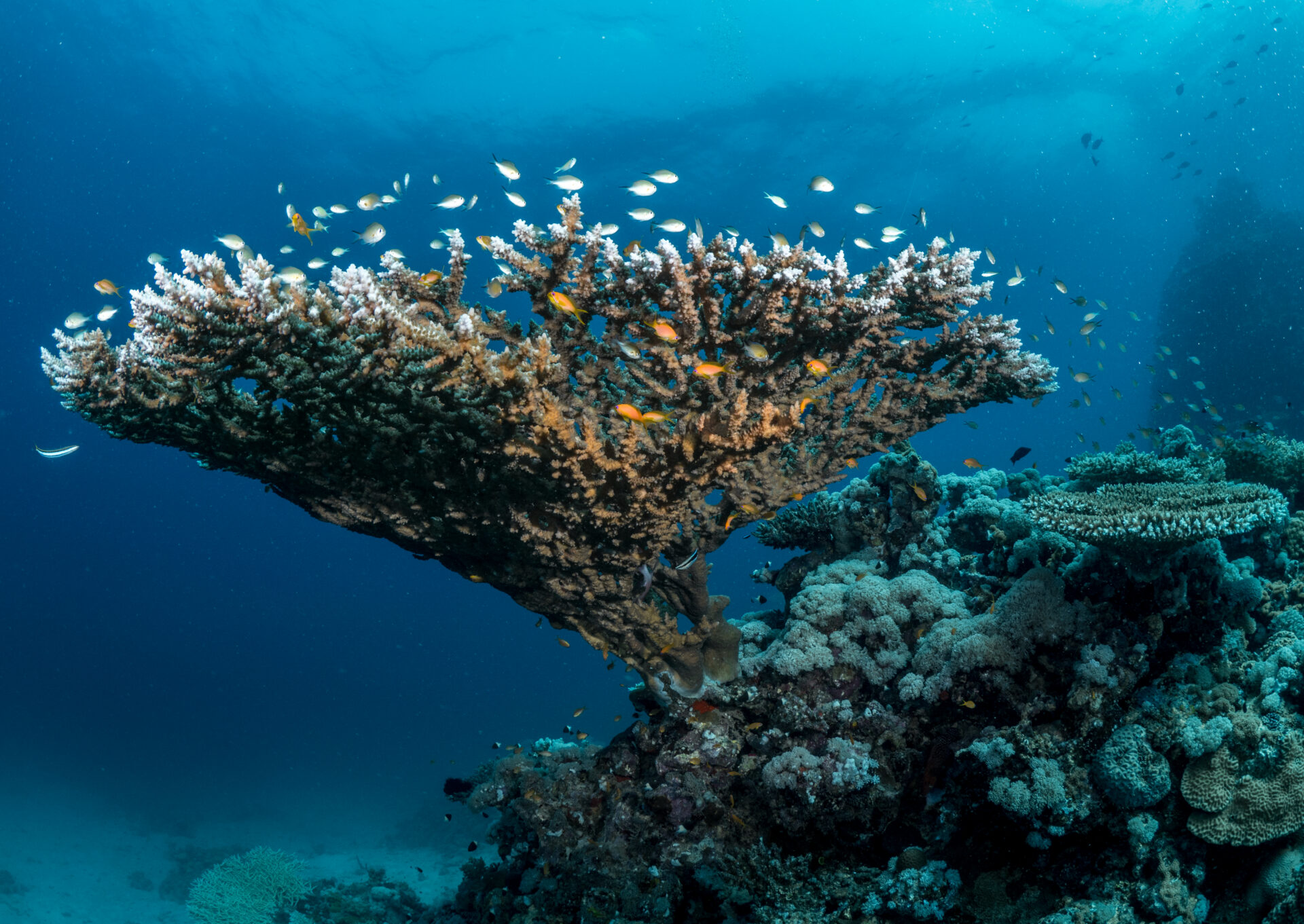
To boost the resilience of corals in the face of increasing sea temperatures and the spread of disease, KAUST researchers have found that controlled, low-level exposure to dead pathogenic cells can help corals resist future infection[1].
“Corals don’t have an adaptive immune system like humans, so it seemed unlikely they could gain any protection from ‘vaccine-like’ exposure to pathogens,” says study author Matteo Monti, who conducted the work under the supervision of KAUST’s Raquel Peixoto. “However, we were curious to understand whether a previous microbial encounter could change how corals respond to later infections.”
Corals are increasingly under pressure from marine heatwaves and microbial infections, and these threats often occur simultaneously. Corals live in a close partnership with microscopic algae that provide them with energy and give them their color. During prolonged heat stress, the corals and algae must compete for limited resources: the corals expel the algae and turn white in a process known as coral bleaching.
“Pathogenic infections make this situation worse,” says Monti. “Disease-causing microorganisms can damage coral tissues, release harmful compounds, disrupt the coral-algae partnership and force the coral to expend more energy on defense and repair. Heat and infection reinforce one another: warming makes corals more vulnerable to disease, while infection reduces their ability to cope with warming.”
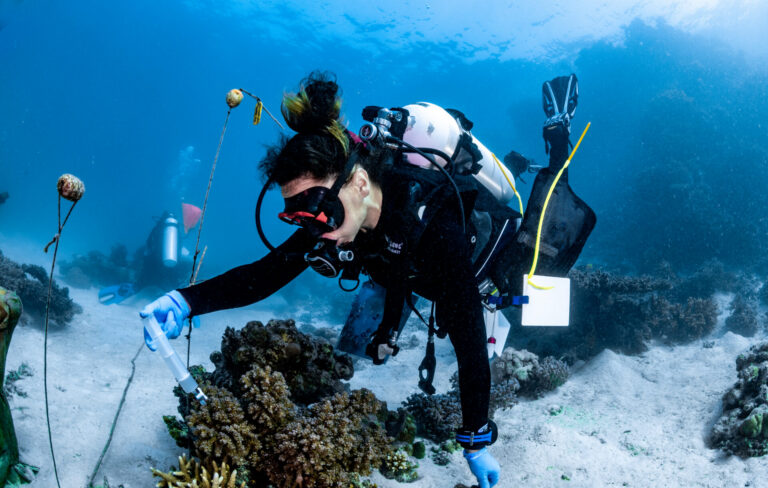
For their study, the team gathered healthy samples of a common Red Sea reef-building coral called Pocillopora favosa, divided them, and placed them in aquariums supplied with natural seawater. Selected coral fragments from each colony were then exposed to either active or inactive cells from Vibrio coralliilyticus, a pathogenic bacterium that commonly infects corals. Both primed and unprimed corals were then exposed to heat stress and V. coralliilyticus.
The primed corals showed a more regulated response when exposed to infection under heat stress, while unprimed corals experienced greater heat stress and pathogen-driven bleaching. This was the case regardless of whether the primed corals had been exposed to live or chemically inactivated bacterial cells. The microbiomes and gene expression patterns of primed corals differed markedly from those of unprimed corals, suggesting that both the coral host and its microbiome had been conditioned by the earlier exposure to V. coralliilyticus.
“Corals may possess a form of immune-like memory, or immune priming, which helps them retain information from previous encounters and respond more effectively to repeated microbial threats,” says Monti. “A better understanding of coral immune priming could expand our portfolio of microbial therapies for coral conservation and reef restoration.”
These findings could be particularly valuable for Saudi Arabia and across the Middle East and North Africa, where coral reefs support biodiversity and fisheries, protect coastlines, sustain tourism, and are the focus of major restoration programs.
“This research is aligned with the Kingdom’s priorities to protect coral reefs from multiple threats and offers a potential nature-based strategy to address the growing threat of pathogenic infections we’re seeing in the Red Sea,” says Peixoto. “These themes are priorities for KAUST, and this study is a great example of innovative science that can support Saudi’s Vision 2030.”
“This study is a proof of concept, not a treatment ready for use on reefs,” cautions Monti. “Deliberately releasing live pathogens is neither safe nor practical. Importantly, our study showed that corals could also be primed using inactivated cells, providing a promising starting point for developing safer coral ‘priming’ approaches.”
Reference
- Monti, M., Garcias-Bonet, N., Garcia, F.C., Santoro, E.P., Aljuaid, G., Schuster, K., Antony, C.P., Casartelli, M., Beenham, L., Giorgi, A., Colin, L., Voolstra, C.R. & Peixoto, R.S. Pathogen priming reveals host immune training and microbiome conditioning in corals. ISME Host Microbe 1, aazag001 (2026)| article.
ABOUT THE AUTHOR
Matteo Monti
Postdoc

You might also like
Marine Science
Sustainable seafood sources could help close global nutrition gaps
Marine Science
Tracing 700 million years of cell evolution
Marine Science
Mapping movements of marine megafauna shows protection must go further
Marine Science
Red Sea coral absorbs chemical contamination
Marine Science
Buying time for coral reefs
Marine Science
Measuring spatial differences in reef-building corals to guide future management
Marine Science
Potential gains from replenishing reef fish stocks revealed
Marine Science