

Electrical Engineering
New research tool for precision substance delivery in plants
A reusable system combines microneedles with a miniature pump to deliver chemical and biological substances into specific regions of living plants, giving researchers greater control over experiments.


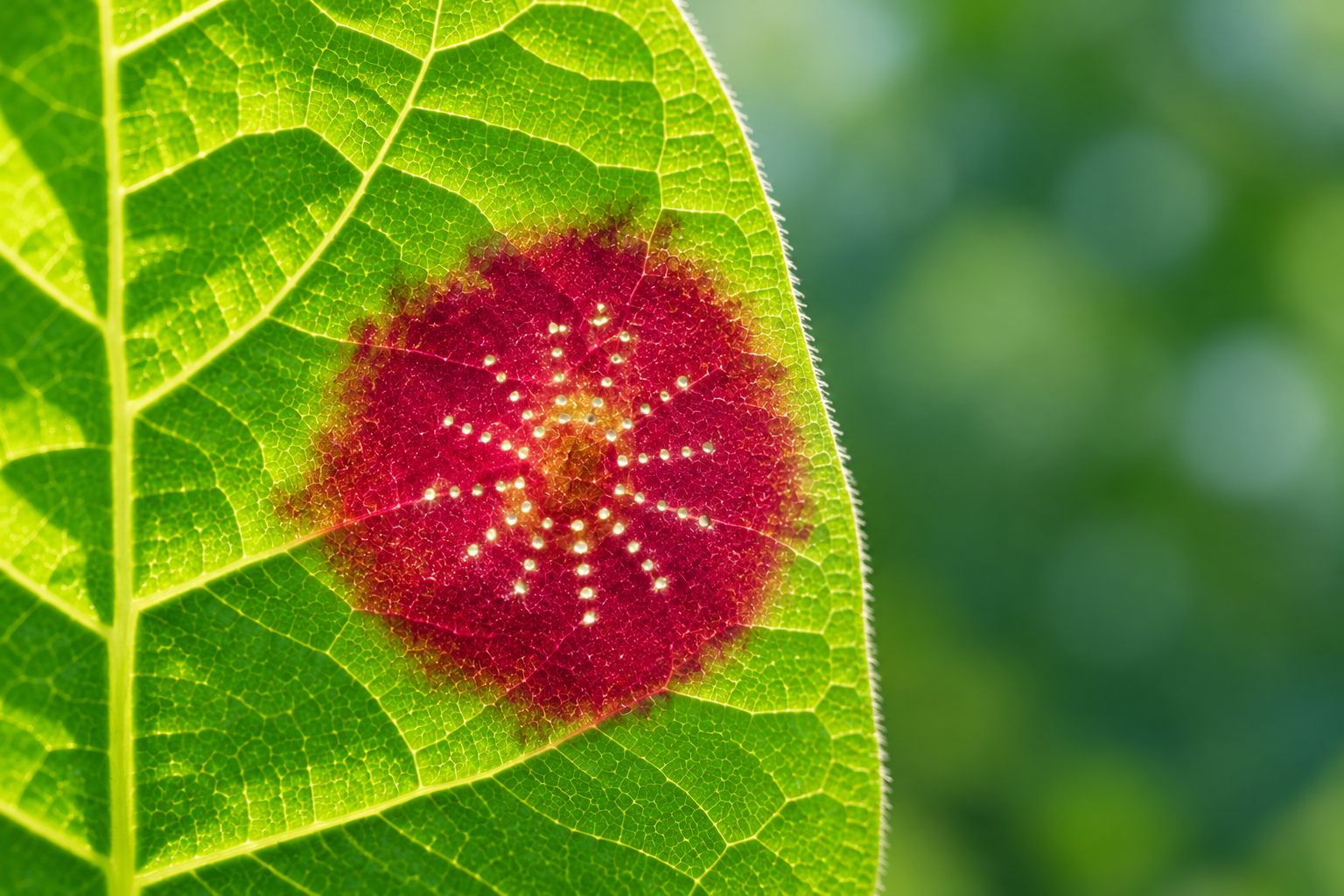
- Precise delivery of substances is essential for studying how plants respond to different treatments.
- The new device uses microneedles to access selected regions of a leaf, while an externally controlled pump regulates fluid delivery.
- This method could support plant biotechnology and the development of systems that use signals from plants to trigger targeted delivery.
Why do researchers need targeted delivery into plants?
To understand how plants respond to a chemical or biological substance, researchers often need to introduce it into a particular region of tissue and observe the response.
Common laboratory methods can require manual application or expose larger areas than intended. This makes it harder to control precisely where and when a substance reaches the desired tissue.
KAUST researchers have developed a system called a phytoinjector that combines tiny needles with a lightweight pump. This device enables researchers to deliver substances into defined regions of living leaves and control the process externally[1].
How do the needles and pump work together?
The device uses an array of microneedles with open channels running along their sides. These channels carry fluid from an external supply into the leaf through several predefined access points.
A miniature pump drives the fluid. It uses a small speaker to move a flexible silicone membrane, pushing liquid through the system. Adjusting the applied voltage and the frequency of this movement changes the pump’s output.
“Microneedles have been used for plant delivery before. Our advance is integrating them with an actively controlled pump and external fluid supply in a reusable system,” says Leyang Li, lead and corresponding author of the study. “By adjusting the voltage and operating frequency, we can regulate fluid delivery into selected regions of living leaves, rather than relying solely on passive movement or manual application,” he explains.
What did the tests reveal?
To test biological delivery, the researchers used Agrobacterium, a soil bacterium widely used to introduce genetic material into plants. The bacteria carried the RUBY gene, which triggers the production of a vibrant red pigment when expressed in plant tissue. This allowed the researchers to see where the genetic material was delivered.
They then compared three delivery approaches and found that active, pump-driven delivery produced a broader red coloration in the tobacco leaves than either applying the bacteria to microneedle-punctured leaves or attaching the device without activating the pump. Furthermore, the microneedle system remained functional even after 100 insertions into leaf tissue.
From research tool to future applications
The immediate application of this system is as a research tool. By delivering substances to specific regions of living plant tissue, it could support experiments investigating the effects of localized chemical and biological treatments, helping scientists study how plants respond to different stimuli while leaving surrounding tissues undisturbed.
This could open new opportunities in plant biotechnology and allow more detailed investigation of plant characteristics and responses to environmental conditions.
The technology could also contribute to new approaches to precision plant intervention.
“In future, the device could be connected to sensors that monitor plant conditions,” says Khaled Salama, professor of electrical and computer engineering and co-corresponding author of the study. “This would allow interventions to respond to signals from the plant itself. Although the device has not yet been tested in the field, it provides a platform for exploring some exciting possibilities.” Such approaches could help advance research in sustainable agriculture and food security.
Reference
- Li, L., Bukhamsin, A., Mundummal, M., Hamdan, K.S., Blilou, I., Salama, K.N. Microneedle-micropump phytoinjector platform for tunable and localized delivery in living plants. Device 4 (2026) | article.
You might also like
Electrical Engineering
Wearable microneedle patch could improve drug monitoring

Electrical Engineering
Laser security system protects online data

Electrical Engineering
Seeing smarter with a light-controlled synaptic device
Electrical Engineering
Gallium oxide electronics withstand extreme cold

Computer Science
AI-based hydrogen plant models improve power grid stability

Electrical Engineering
Quantum dot lasers outshine expectations
Bioengineering
Self-aware biosensors boost digital health monitoring
Bioengineering