

Electrical Engineering
Wearable microneedle patch could improve drug monitoring
A wearable patch with microneedles coated in DNA molecules tracks levels of antibiotics in the body in real time.



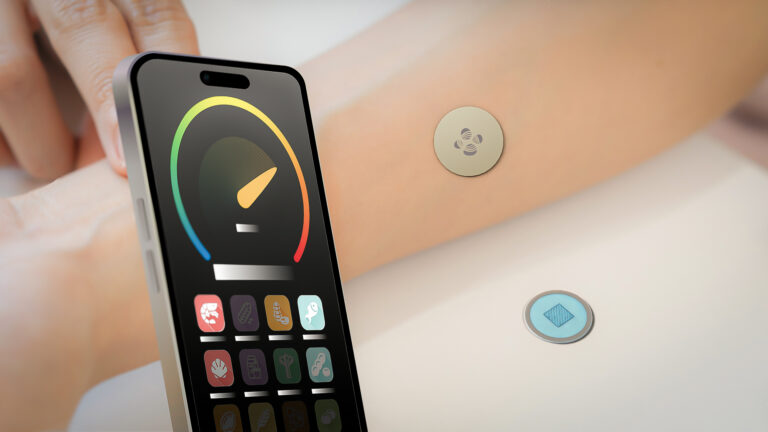
To improve precision drug monitoring for critical medicines such as potent antibiotics, an interdisciplinary team of KAUST researchers has designed a wearable device capable of continuously monitoring drug levels in the interstitial fluid just beneath the skin. Their platform is designed to monitor the antibiotic vancomycin, but could be adapted for other medicines, supporting more personalized dosing. [1].
The long-established method for monitoring levels of therapeutic drugs in the body relies on drawing blood and waiting several hours for laboratory results.
“A major drawback of this, besides the wait for results, is that it only offers doctors a snapshot of a highly dynamic system — every individual’s body reacts to and metabolizes drugs differently,” says doctoral student Yurii Tsyban, who worked on the project under the supervision of Khaled Nabil Salama. Certain medications have a narrow therapeutic window, meaning that small changes in drug concentration can have significant clinical consequences: a dose that is safe and effective for one patient may prove toxic or ineffective for another.
Interstitial fluid is the liquid found in the microscopic spaces between cells. Dermal interstitial fluid surrounds cells in the dermis, the layer beneath the skin’s surface. It contains nutrients and metabolites, and its concentrations of many drugs closely reflect those in the bloodstream, making it a promising alternative to traditional blood draws. Indeed, routine monitoring of glucose levels in interstitial fluid has become common in diabetes management.
The team designed a wearable patch comprising a tiny microneedle array that lightly punctures the skin to continuously monitor levels of the antibiotic vancomycin.
“Our microneedle device is coated with a DNA aptamer—a short strand of DNA designed to selectively recognize and bind a target molecule, such as a drug,” says Tsyban. “When the drug is present in the interstitial fluid beneath the skin, the aptamer changes its shape. This conformational change produces an electrochemical signal that enables continuous quantification of the drug concentration.”
This electrical signal is measured by a miniature mobile potentiostat (MSTAT) designed by the team. The MSTAT processes incoming data, converts it into an estimated drug concentration, and wirelessly transmits the results to a smartphone app. This could reduce the need for complex laboratory equipment and specialized expertise, enabling real-time therapeutic drug monitoring in hospitals, outpatient clinics, and home settings, and improving treatment safety and optimizing drug dosing.
Initial studies in mice showed that the device could track repeated dosing events over four hours. Separate laboratory tests using artificial interstitial fluid demonstrated that the system remained stable for up to 10 hours.
“The device also showed clear differences in vancomycin levels from one animal to another, which is exactly the kind of information that is missing when dosing is based on occasional blood tests,” says Salama.
“Although the word ‘needle’ may initially be intimidating, microneedles are very different from conventional hypodermic needles,” adds Tsyban. “These tiny needles penetrate only the outer layers of the skin and are comfortable to wear. As wearable technologies become more common, we expect acceptance to grow, particularly if the technology reduces the need for repeated blood draws and hospital visits.”
“There is still important work ahead before this device can be used clinically, including improving its long-term stability and completing required biocompatibility studies,” concludes Salama.
Reference
- Tsyban, Y., Shetty, S.S., Li, Y., Ibrahim, L., Alsulaiman, D., Merzaban, J.S. & Salama, K.N. Aptamer-based microneedle sensing platform for in vivo drug monitoring. Device 4, 101205 (2026).| article
ABOUT THE AUTHOR
Yurii Tsyban

You might also like

Electrical Engineering
Laser security system protects online data

Electrical Engineering
Seeing smarter with a light-controlled synaptic device

Electrical Engineering
Gallium oxide electronics withstand extreme cold

Computer Science
AI-based hydrogen plant models improve power grid stability

Electrical Engineering
Quantum dot lasers outshine expectations

Bioengineering
Self-aware biosensors boost digital health monitoring
Bioengineering
Smart patch detects allergies before symptoms strike

Computer Science