

Bioscience | Chemistry
Multi-enzyme pathway delivered into living cells
Nanoreactors ferry multi-protein machinery into cells, opening a potential route to precision therapies.


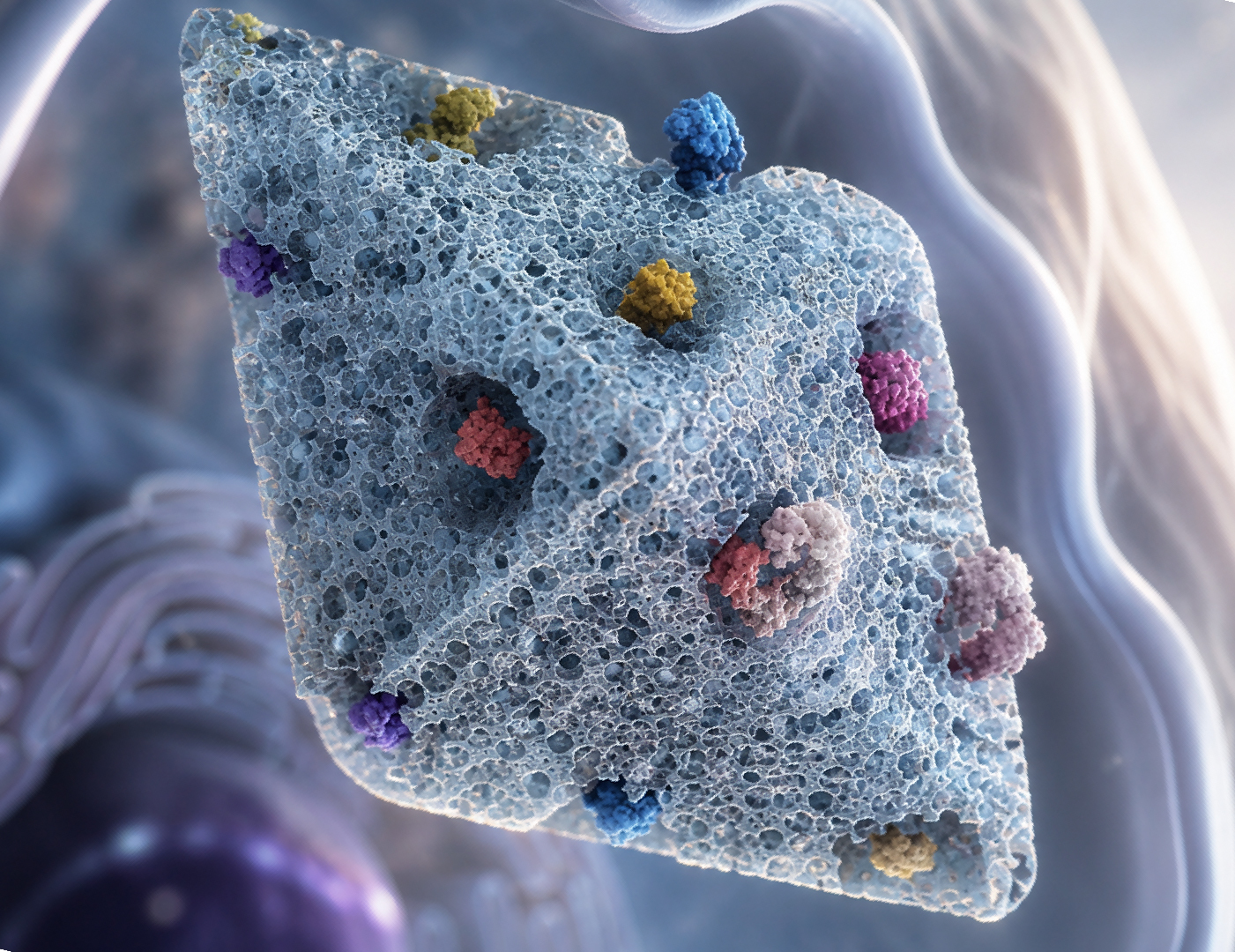
Antibodies, enzymes, and other protein-based drugs are among the most powerful tools in medicine, and clinicians often combine them for greater effect. However, each one travels through the body independently and cannot penetrate cells, meaning they can only influence cellular activity from the outside.
Using specially engineered nanoparticles, KAUST researchers have packaged an entire six-protein biochemical pathway into a single delivery unit and shuttled it into living mammalian cells, where the proteins arrived together and functioned as a self-contained molecular assembly line[1].
The findings establish what the team calls ‘pathway transplantation’: a technique that could eventually allow drug companies to introduce working multi-protein systems directly into target cells, bypassing the hit-or-miss coordination on which combination protein therapies currently depend and potentially allowing diseased cells to produce therapeutic molecules locally.
Notably, the approach does not involve genetic engineering. No DNA is altered; no genes are inserted. The proteins themselves are the therapy, delivered ready-made and ready to work, without the challenges associated with modifying a patient’s genetic material.
“This is the most complex multi-protein system encapsulated in a MOF to date,” says Ainur Sharip, a former Ph.D. student in Stefan Arold’s laboratory. “And it’s the first time such a multi-enzyme nanoreactor system has been delivered into cells to produce a complex drug molecule,” adds Somayah Qutub, a former Ph.D. student in Niveen Khashab’s materials science laboratory and now a postdoctoral researcher at KAUST.
Sharip and Qutub shared first authorship of the new study, published in Advanced Materials.
The work brings together two distinct threads of research developed in parallel at KAUST. Arold’s laboratory has long studied how proteins interact and cooperate within complex biological systems. Khashab’s group, meanwhile, has pioneered the engineering of metal-organic frameworks (MOFs) — sponge-like crystalline materials whose internal pore sizes can be precisely controlled — as vehicles for delivering biological cargo into cells.
For this study, the teams enlarged the pores of an iron-containing MOF by treating it with acetic acid, making enough space to absorb a six-protein mixture in a single step. Protein loading was highly efficient: more than 97 percent of the proteins were captured and retained.
To put the platform to the test, the researchers chose to deliver a six-protein pathway borrowed from a purple-pigmented soil bacterium, which converts a common amino acid into a compound called violacein, a natural pigment with a deep purple hue that is easily visible to the naked eye.
When the loaded nanoparticles were added to human cells in the laboratory, the cells turned purple, confirming that all six proteins had arrived together, remained active, and functioned cooperatively within the cells. “These nanoreactors enter cells where they start integrating into — and changing — the cell’s biochemistry,” explains biochemist Raik Grünberg, a research scientist in Arold’s laboratory, who led the study.
Violacein is a promising compound being investigated for several therapeutic applications, and the researchers hope to further develop their delivery system toward cancer treatment. The key advance of this study, however, is the platform itself: a general-purpose tool that could potentially deliver a wide range of cooperative protein systems into different cell types.
Pathways that regulate the immune system, correct metabolic errors, or trigger precisely targeted cell death could, in principle, all be packaged and delivered the same way, Grünberg says. The nanoreactors also survive freeze-drying, remain active after weeks in storage, and can be reused multiple times, which are important attributes if the technology is ever to reach patients.
What’s more, the iron-based MOF at the heart of the platform has already been shown to be biodegradable and well tolerated in mice, an encouraging sign that therapeutic applications will be possible.
“Our next step will be to try the system in animal models,” Grünberg says, “because we think this could become a new therapeutic approach for a wide range of diseases.”
Reference
- Sharip, A., Qutub, S.S., Farooqui, M.M., Baslyman, W., Khalfay, N., Alimi, L.O., Lopez Sanchez, P., Zhao, L., Chernyshevskaia, M., Colombo, G., Khashab, N.M., Arold, S.T. & Grünberg, R. Hierarchically engineered multi-enzyme nanoreactors for in vitro drug biosynthesis and pathway transplantation into cells. Advanced Materials e23006 (2026).| article.
You might also like
Applied Physics
Colorful solution to advanced disease diagnosis
Chemistry
Opening a window on architectural nano-design
Bioscience
Brain fuel also helps wire neural connections
Bioscience
Single small-molecule model reveals insights into human embryo development

Bioscience
Can AI finally bring order to biology’s data deluge?

Chemical Engineering
Natural solvents enable fully bio-based membranes
Bioengineering
Bio-inspired network structures for next-generation AI
Bioscience