

Bioscience
Robust workflow built for chemical genomic screening
A unified protocol for chemical genomic screening aims to improve reproducibility and collaboration in addressing antimicrobial resistance.


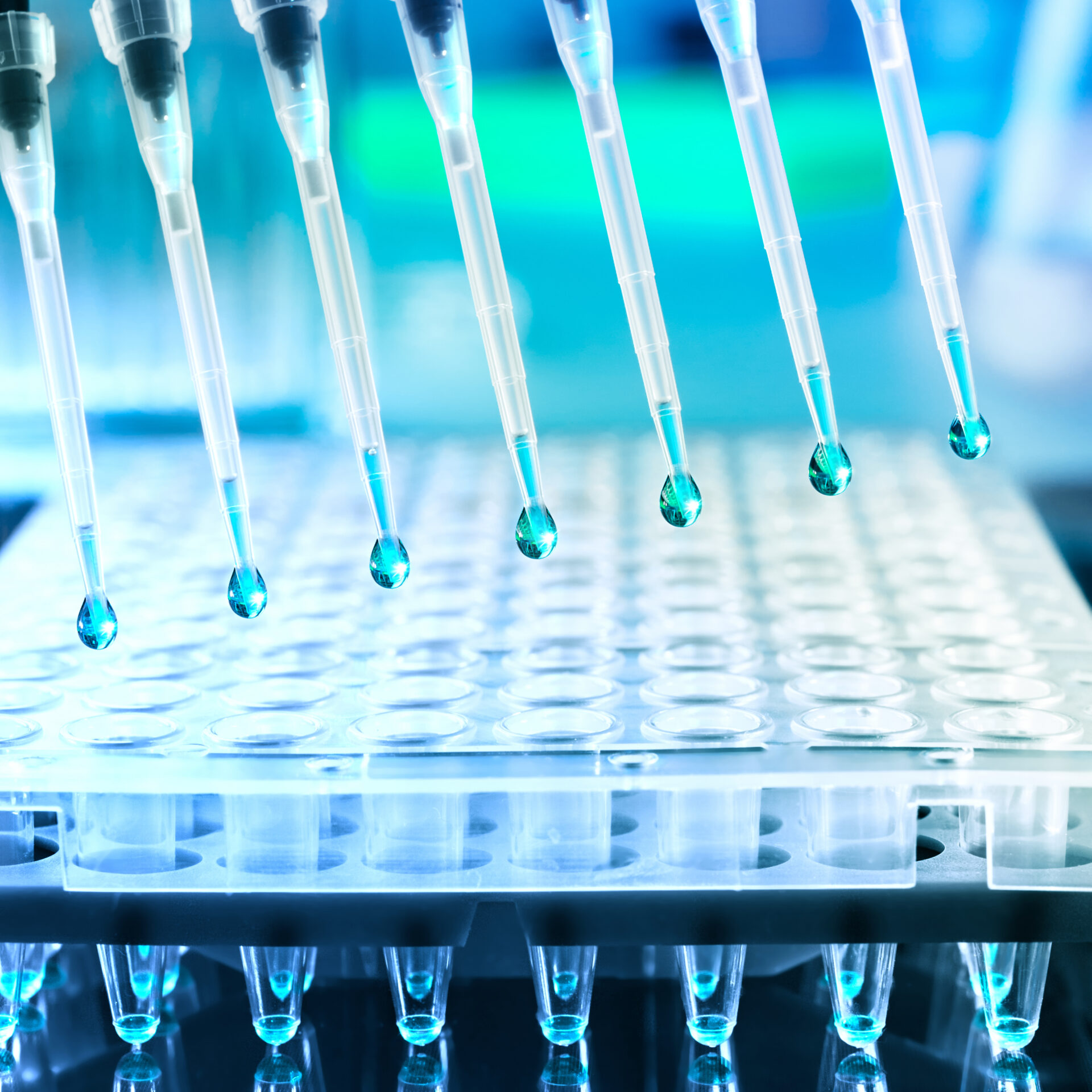
Chemical genomic screening provides a powerful way to pinpoint which genes help an organism to survive (or falter) under a particular stressor, and to identify the functional roles played by these genes. For example, such screening tests can assess microbes for resistance to antibiotics, or to monitor their responses to new drug candidates.
However, there has been a lack of a standardized protocol for conducting these valuable tests, which has slowed progress. This gap has been addressed by a team at KAUST, in collaboration with scientists at the Universities of Birmingham and Newcastle in the United Kingdom[1]. The collaboration combined established practices from multiple laboratories to create a coherent and broadly applicable screening workflow.
“Chemical genomic screening has traditionally been performed using lab-specific, ad hoc methods,” says Georgia Williams, who worked on the project under the supervision of Danesh Moradigaravand. “Differences in equipment, organisms, experimental design and data analysis meant that no single protocol captured the full process from start to finish. As a result, experiments have been difficult to reproduce across institutions,” she explains.
Chemical genomic screening is used to assess the effect of chemical or environmental stressors on single-gene mutant libraries and can also be adapted for use with clinical strain collections from hospitals. The different gene mutants respond in different ways to stressors, resulting in variations in colony size, biofilm formation, and structural composition. The tests allow scientists to study isolated ‘phenotypes’ of a gene responding to specific conditions and determine the functional links between a stressor and that gene.
The research team focused on arrayed library-based screening, where individual gene mutants are placed in different wells in an array, then monitored for their responses to stressors. Their new protocol is fully integrated and covers every step of the process, from experimental setup to data analysis. It combines automated imaging, standardized data handling and built-in quality control with clear troubleshooting guidance for users.
For individual scientists, this protocol will save time, reduce error in the lab, and produce consistent, high-quality data. For the wider scientific community, the standardization of workflows enables data comparison and integration across laboratories, making large-scale datasets more reliable and reusable.
“Our workflow allows researchers to focus on biological questions rather than dealing with technical setup and troubleshooting,” says Williams. “Shared workflows also promote collaboration by allowing researchers from different institutions to work within a common technical framework, which can speed up discovery in microbial genetics and systems biology.”
The workflow can be used for instances when researchers need to assess how genetic changes affect microbial fitness under stress. For example, it can accelerate antibiotic discovery by identifying genes involved in drug sensitivity or resistance. It can also support synthetic biology by enabling scientists to rapidly compare engineered strains under industrial or environmental stress conditions. In environmental microbiology, the workflow can be used to screen microbes for tolerance to toxins or pollutants.
“We plan to expand the workflow to assess additional microbial species and stress conditions,” concludes Moradigaravand. “This will include many antibiotic-resistant bacterial strains that are on the WHO priority pathogen list, for which new drugs are urgently needed.”
Reference
- Williams, G., Ahmad, H., Sutherland, S., Haycocks, J., Benedict, S., Hart, A.J., Doherty, H.H., Sullivan, R., Alao, M., Ma, X., Xu. Q., Bryant, J., Glinkowska, M., Banks, P., Moynihan, P., Milner, M.T., Moradigaravand, D. & Banzhaf, M. High-throughput chemical genomic screening: a step-by-step workflow from plate to phenotype. mSystems 10(2025).| article.
ABOUT THE AUTHOR
Georgia Williams
Ph.D. student

You might also like
Applied Physics
Colorful solution to advanced disease diagnosis
Bioscience
Multi-enzyme pathway delivered into living cells
Bioscience
Brain fuel also helps wire neural connections
Bioscience
Single small-molecule model reveals insights into human embryo development

Bioscience
Can AI finally bring order to biology’s data deluge?
Bioengineering
Bio-inspired network structures for next-generation AI
Bioscience
Cell atlas offers clues to how childhood leukemia takes hold
Bioscience