

Bioscience
Harnessing the unintended epigenetic side effects of genome editing
Insights into how CRISPR-Cas9 genome editing leaves lasting epigenetic ‘scars’ may improve safety for patients, and could inform novel treatment options.


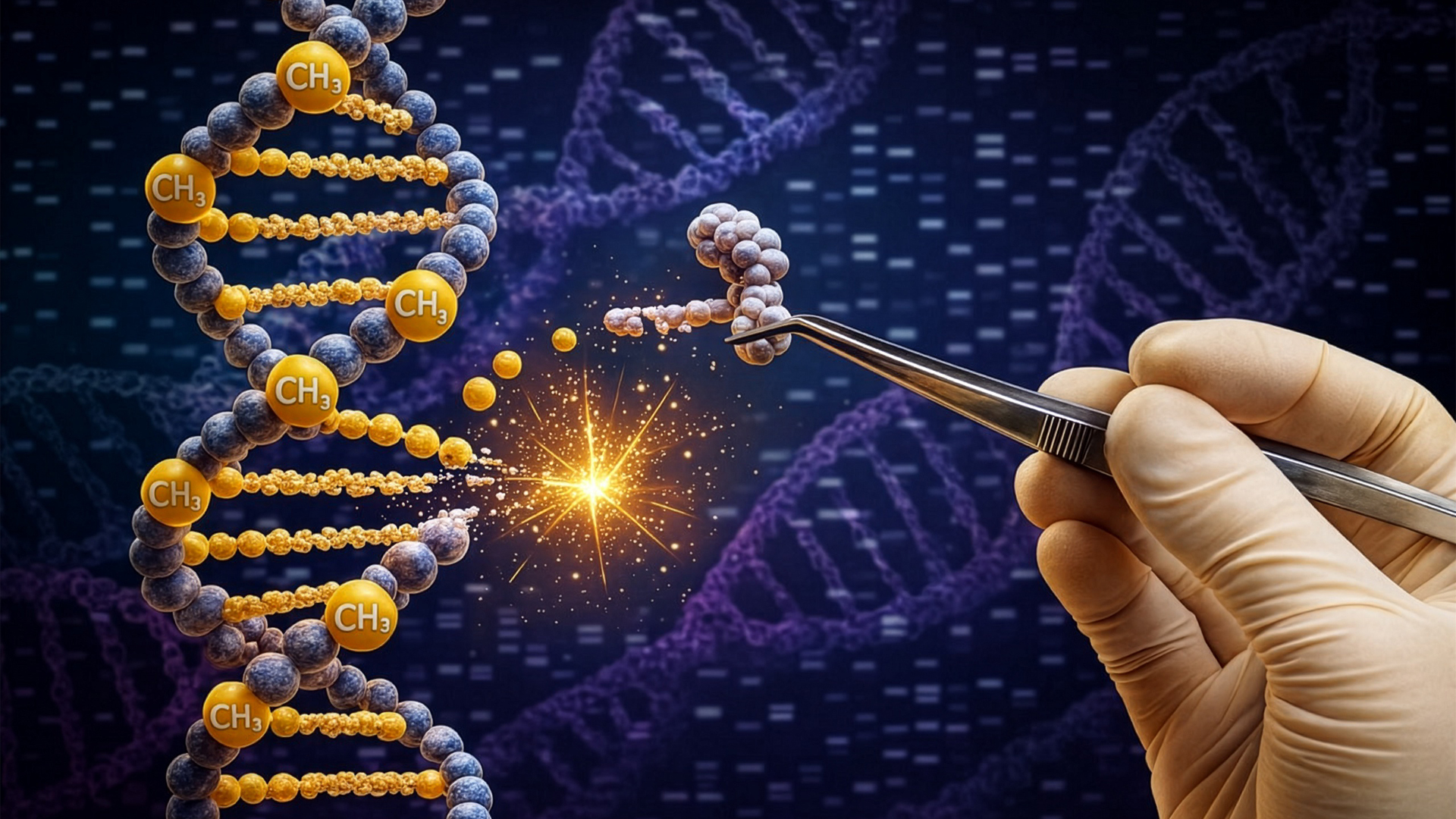
Editing the genome of human cells to disable, repair, or replace faulty genes holds great potential for treating debilitating conditions like sickle cell disease and cancer.
Several therapies that use the CRISPR-Cas9 tool — molecular scissors that precisely cut DNA to edit problematic genes —have now reached the clinic, including a treatment for sickle cell disease and β-thalassemia that has recently been approved by UK and US regulators. Many other potential treatments are undergoing clinical trials worldwide.
However, the impact of this method on epigenetics remains insufficiently explored. To address this gap, a KAUST study employed a novel technique to describe some of the complex epigenetic implications of CRISPR-Cas9 editing[1].
The study shows unexpected side effects of genomic editing that extend beyond changes to DNA sequences. The work by Mengge Wang, Yingzi Zhang, Chongwei Bi, and Mo Li discovered that CRISPR-Cas9 can also disrupt the cell’s epigenetic landscape, leading to changes in DNA methylation that persist long after the DNA breaks have been repaired.
“Scientists have extensively studied the genetic consequences of Cas9-induced DNA breaks, yet their potential epigenetic impact remains largely unknown,” says Wang. “Our work shows that genome editing can leave behind epigenetic scars—lasting changes in DNA methylation that endure well after the DNA itself is repaired.”
DNA methylation acts like a biochemical ‘switch’ that controls which genes are turned on or off without changing the underlying genetic code. When these switches are disrupted, genes may become abnormally silenced or activated, potentially affecting how cells grow, differentiate, or respond to stress. Such epigenetic alterations are often linked to diseases like cancer, aging-related disorders, and developmental abnormalities.
Most previous studies relied on short-read or PCR-based methods, which cannot simultaneously capture DNA sequence and methylation information, especially at the single-molecule resolution. These methods lose the native chemical context of DNA, notes Wang, making it difficult to study how CRISPR-Cas9-induced DNA breaks affect genome methylation.
“By contrast, we used long-read nanopore sequencing of native DNA that overcomes these limitations and provides a complete view of both sequence and methylation changes on the DNA molecule,” explains Zhang. “We tracked how the epigenetic ‘marks’ around Cas9 cutting sites changed after DNA repair.”
“Together with insights from our stem cell models and a customized analysis strategy, we demonstrated that Cas9-induced DNA breaks can cause profound, stable changes in local DNA methylation patterns,” says Wang. “Importantly, this effect is universal — it occurs regardless of the chromatin context or cell type.”
Changes in DNA methylation could influence gene expression long after the DNA itself is repaired. “We found that similar DNA methylation changes also occur during natural DNA damage repair processes in unedited human cells,” adds Zhang. “It may be possible to harness controlled breaks and subsequent repair processes to correct abnormal methylation patterns associated with cancer, genetic disorders, or aging.”
“This discovery reveals a previously overlooked layer of complexity in genome editing and DNA repair, emphasizing the need to consider epigenetic stability alongside genetic accuracy,” says Li. “Recognizing and monitoring these effects will help improve the safety of therapeutic genome editing.”
The researchers believe that understanding these processes could support the development of new therapeutic strategies. “Controlled DNA breaks could be harnessed to correct abnormal methylation patterns associated with cancer or genetic disease — turning a potential side effect into a precision tool for epigenetic therapy,” concludes Li.
Reference
- Wang, M., Zhang, Y., Bi, C., & Li, M. CRISPR-Cas9-induced double-strand breaks disrupt maintenance of epigenetic information. Genome Biology (2025) | article.
ABOUT THE AUTHOR
Mengge Wang & Yingzi Zhang
Postdocs

You might also like
Applied Physics
Colorful solution to advanced disease diagnosis
Bioscience
Multi-enzyme pathway delivered into living cells
Bioscience
Brain fuel also helps wire neural connections
Bioscience
Single small-molecule model reveals insights into human embryo development

Bioscience
Can AI finally bring order to biology’s data deluge?
Bioengineering
Bio-inspired network structures for next-generation AI
Bioscience
Robust workflow built for chemical genomic screening
Bioscience