

Bioscience
Cell atlas offers clues to how childhood leukemia takes hold
Blueprint of blood cell development traces molecular pathways of health and disease.


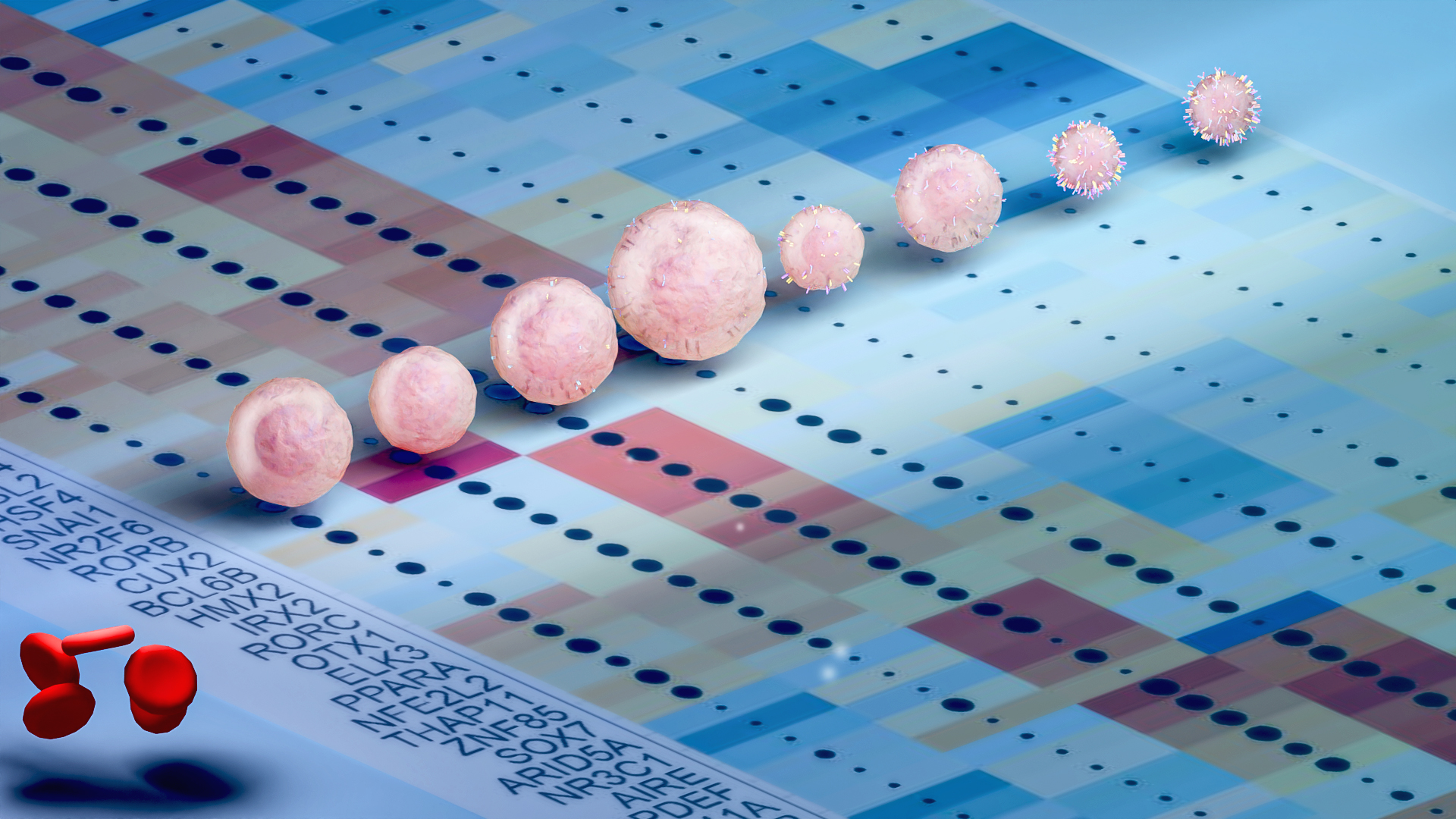
A new cellular atlas charts, in unprecedented detail, how human B cells are built step by step — and offers a window into how this developmental process goes awry in leukemia.
The KAUST-led investigation provides a sweeping inventory of the genes and regulatory switches that guide early B cell differentiation. This offers a blueprint that could open avenues for both diagnostics and therapies for B-cell acute lymphoblastic leukemia (B-ALL), the most common childhood cancer[1].
“We show that leukemia subtypes line up with distinct regulatory signatures that mirror differentiation in healthy individuals, which may help explain why some leukemias behave differently,” says David Gomez-Cabrero, a computational biologist who co-led the study.
“Because each stage of healthy B-cell development carries a recognizable signature,” adds Núria Planell, a co-leader of this project and former postdoc in Gomez-Cabrero’s group, “those patterns could be used for better classifications of leukemia, or eventually flag abnormal development earlier.”
B cells are the body’s antibody factories, generated in the bone marrow through a tightly ordered series of steps. These transitions are controlled by a handful of regulatory proteins that flip genes on or off.
Most of what biologists know about these switches comes from mice. Whether human cells follow the same rules has been less clear. The new work now provides the first comprehensive human roadmap, showing how genetic regulators orchestrate each step of B cell maturation and how those programs can be hijacked in leukemia.
Gomez-Cabrero — together with Jesper Tegnér and other members of their AI4BioMedicine lab, along with collaborators in Spain, Sweden, the United Kingdom, and the United States — combined experimental and computational approaches. They charted accessibility of stretches of DNA, and how that shaped gene activity, across eight successive stages of B cell precursors from 13 healthy donors. Integrating these datasets, they assembled a regulatory atlas of unprecedented depth that captures both master switches and the downstream programs they control. Those regulatory programs were further validated at single-cell resolution.
New insights from this resource included the discovery that ELK3, a transcription factor previously overlooked in human B cell biology, appears to spur proliferation during early development. The researchers traced its regulatory program and found it tied directly to cell cycle and growth pathways already implicated in cancer, suggesting a potential vulnerability that malignant cells may exploit.
Further clarity came from layering disease data onto the healthy-cell framework. When leukemia samples were aligned with the atlas, distinct patterns emerged: Subtypes of B-ALL bore the hallmarks of specific developmental states. By mirroring normal stages, the authors infer, these leukemias may inherit biological traits that shape their aggressiveness and resistance to therapy — insights that may help refine prognosis and treatment decisions.
“Turning these insights into treatments requires follow-up lab testing, but our map points to where to look first,” explains study co-author Xabier Martinez de Morentin, a postdoctoral scientist at KAUST.
Importantly, researchers worldwide can explore the atlas through B-rex[2], a publicly available web application built by Alberto Maíllo, a KAUST research scientist.
Meanwhile, Gomez-Cabrero and his colleagues are extending the approach in Saudi Arabia to local blood cancers, with a focus on regional genomic variation and lifestyle-specific risk factors too often absent from global studies. By grounding their atlas in the realities of local biology, they hope to reveal cancer signatures that might otherwise remain invisible and to help bring precision medicine closer to patients across the Gulf region.
Reference
- Planell, N., Martínez-de-Morentin, X., Mouzo, D., Lara-Astiaso, D., Vilas-Zornoza, A., Martín-Uriz, P. S., Alignani, D., Paiva, B., Maillo, A., Kurowska, A., Berastegui, N., Garcia-Olloqui, P., Urdangarin, A., Noori, P., Ortega-Legarreta, A., Hernaez, M., Lagani, V., Kiani, N., Merkenschlager, M., Ezponda, T., Martín-Subero, J. I., Ramírez, R. N., Tegner, J., Prosper, F. & Gomez-Cabrero, D. Uncovering the regulatory landscape of early human B cell lymphopoiesis and its implications in the pathogenesis of B-ALL. Science Advances 11, eadw3110. (2025).| article.
- Gene regulatory network of early B cell differentiation in humans. Available at https://translationalbio.shinyapps.io/brex/
ABOUT THE AUTHOR
Xabier Martinez de Morentin & Nuria Planell
Postdoc & former postdoc

You might also like
Applied Physics
Colorful solution to advanced disease diagnosis
Bioscience
Multi-enzyme pathway delivered into living cells
Bioscience
Brain fuel also helps wire neural connections
Bioscience
Single small-molecule model reveals insights into human embryo development

Bioscience
Can AI finally bring order to biology’s data deluge?

Bioengineering
Bio-inspired network structures for next-generation AI

Bioscience
Robust workflow built for chemical genomic screening
Bioscience