

Bioscience | Computer Science
AI speeds up human embryo model research
Deep-learning tool outperforms human experts at classifying lab-grown embryo-like structures, enabling advances in developmental biology and drug discovery.


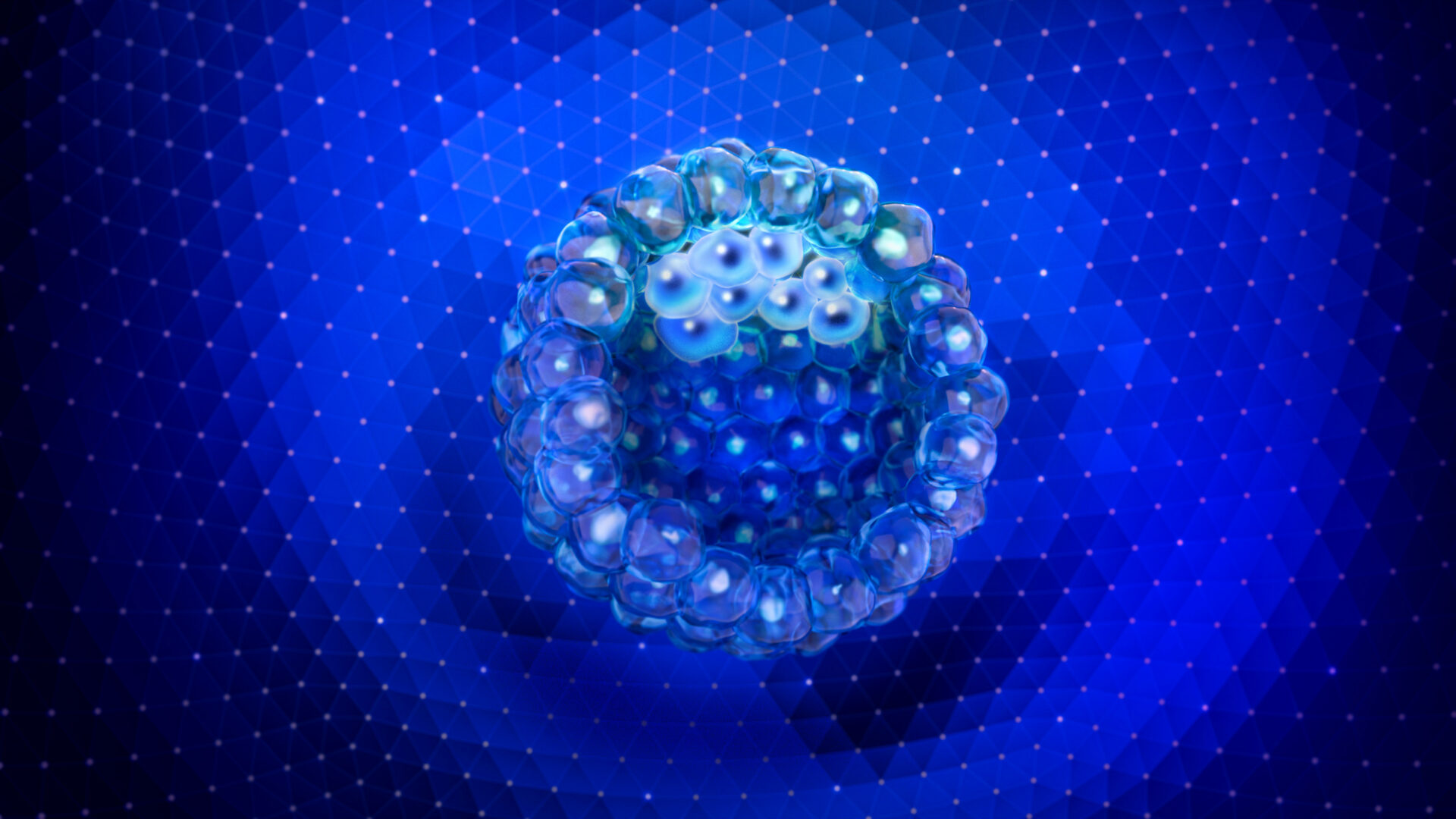
A new machine-learning tool that classifies lab-grown embryo models with exceptional speed and accuracy offers a solution to one of the most pressing problems in developmental biology: how to reliably analyze vast numbers of stem-cell–derived structures known as blastoids, that mimic early human embryos, without relying on slow and subjective human inspection.
The KAUST-developed system, known as deepBlastoid, uses deep learning to sort these structures by morphology in a fraction of the time it would take trained embryologists, with performance that rivals, even surpasses, expert judgment[1]. In benchmark testing, it proved highly adept at classifying early developmental structures, opening new possibilities for high-throughput profiling and uncovering subtle biological effects that might otherwise be missed.
“AI tools like deepBlastoid could reshape how we study the earliest stages of life,” says Zejun Fan, a Ph.D. student who helped develop the tool. “They enable researchers to run larger, more complex experiments, screen new drugs more efficiently, and study rare developmental events with greater precision. This could accelerate discoveries in infertility treatment, toxicology, and synthetic embryo modeling.”
To build deepBlastoid, the team — led by stem-cell biologist Mo Li and computer scientist Peter Wonka — trained an AI tool to recognize patterns in around 1,800 microscope images of blastoids. Each image had been sorted by experts into one of five categories corresponding to the quality of the blastoids; these ranged from well-formed structures with clear inner cell clusters and fluid-filled cavities, to misshapen ones and empty wells.
The researchers found AI learned to match the expert labels with 87 percent accuracy. When the team added a step that sent uncertain cases to human reviewers, the accuracy jumped to 97 percent.
The team benchmarked the tool’s performance against three expert annotators in a head-to-head test. In only 20 minutes, the AI processed thousands of images — around 1,000 times faster than human experts — while matching or even surpassing their accuracy.
To showcase its utility, the team applied deepBlastoid to two real-world use cases. First, they exposed blastoids to a gradient of lysophosphatidic acid (LPA), a signaling molecule known to influence early development. The model detected the expected increases in overall cavitation — the formation of fluid-filled cavities — but also revealed a previously overlooked surge in a specific quality class of blastoids at low LPA concentrations.
Second, they examined the effects of dimethyl sulfoxide (DMSO), a common solvent in drug screening. While the overall morphology appeared unaffected, deepBlastoid pinpointed subtle shifts in blastoid class frequencies, hinting at possible developmental impacts even at low doses.
“It’s a powerful assistant that improves overall efficiency and reliability,” says Li. “This opens the door to data-driven insights about how external factors influence embryo-like development.”
To encourage broader adoption, the team has made deepBlastoid freely available and open-source, allowing other labs to retrain the system with their own images or adapt it to different embryo models.
Fan notes that the field of developmental biology is only beginning to tap the full potential of artificial intelligence. He hopes that tools like deepBlastoid, combined with community engagement and standardized imaging protocols, will lower technical barriers and speed up scientific discovery.
“The main hurdles to adoption are integration into existing lab workflows, the need for high-quality training datasets, and ensuring trust and interpretability of AI decisions in sensitive biological contexts,” he says. “Overcoming these challenges will be crucial to ensure responsible and effective deployment of such technologies.”
Reference
- Fan, Z., Li, Z., Jin, Y., Chandrasekaran, A. P., Shakir, I. M., Zhang, Y., Siddique, A., Wang, M., Zhou, X., Tian, Y., Wonka, P. & Li, M. deepBlastoid: A deep learning model for automated and efficient evaluation of human blastoids. Life Medicine, lnaf026 (2025).| article.
ABOUT THE AUTHOR
Zejun Fan
Ph.D. student
You might also like

Computer Science
Virtual reality headsets open a window into the mind
Applied Physics
Colorful solution to advanced disease diagnosis
Bioscience
Multi-enzyme pathway delivered into living cells
Bioscience
Brain fuel also helps wire neural connections
Bioscience
Single small-molecule model reveals insights into human embryo development
Bioscience
Can AI finally bring order to biology’s data deluge?

Computer Science
AI-based hydrogen plant models improve power grid stability
Bioengineering