

Plant Science
Uncovering the secret to grass’s salty success
Saltgrass is both a potential climate-resilient crop and an important model for studying plant adaptation, genome evolution, and stress tolerance.


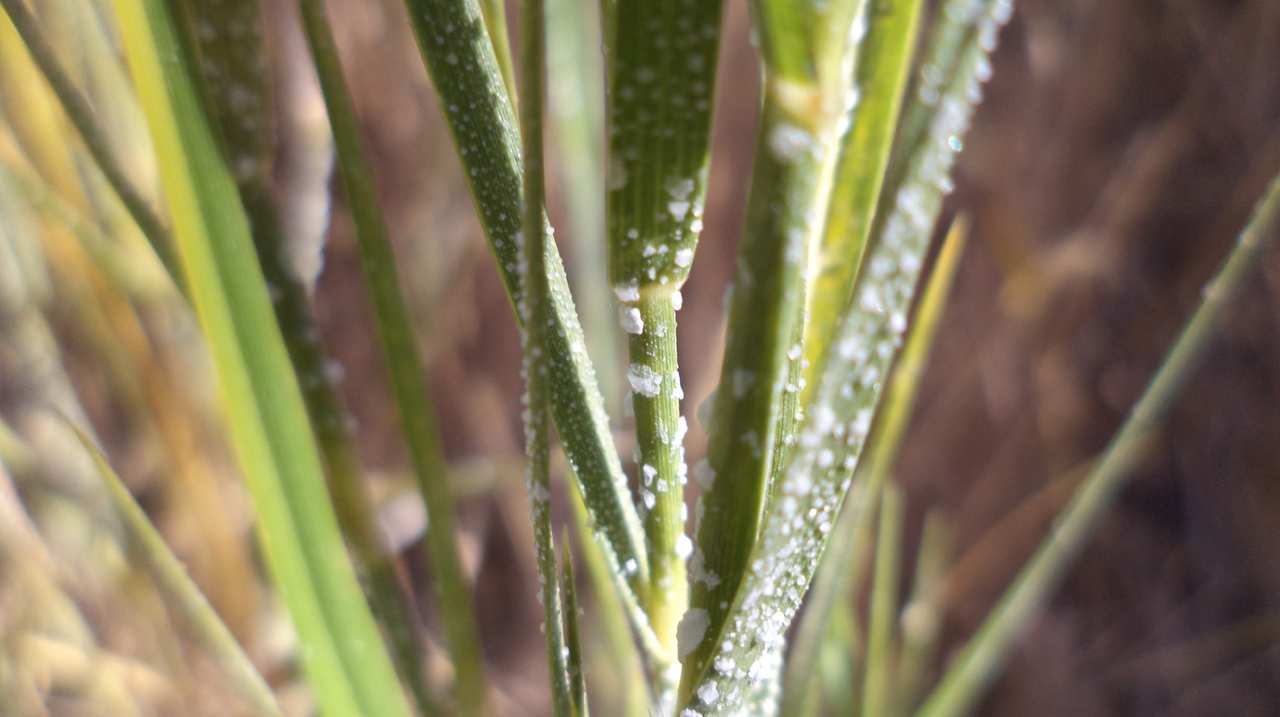
Saltgrass (Distichlis spp.) is a plant that can thrive naturally in highly saline environments. Some species produce edible grain-like seeds, making them promising candidates for future crop development.
Until now, little has been known about the genetics behind saltgrass’s high salt tolerance. New research establishes comprehensive genomic resources for two saltgrass species. The work provides a basis for neodomestication — the rapid developing of wild plants into crops using modern genomics and breeding — and improves our understanding of genome evolution in salt-tolerant grasses[1].
Senior author of the work, Jesse Poland, heads a research group at KAUST with a focus on developing climate-resilient crops. “We are really interested in halophytes – plants that can grow in very saline environments and have strong potential for agriculture,” he says. “In the face of expanding areas of salt-affected agricultural land, being able to domesticate a crop like saltgrass would be a game changer.”
Eleven saltgrass species are distributed across North and South America, with another species in Australia. They occupy saline habitats not accessible to most plant species and are already recognized as valuable plants for conservation and restoration of degraded land.
The comprehensive study of population structure in saltgrass involved whole genome sequencing of 364 individual plants from 35 geographically distinct populations across North America.
Lead author Kashif Nawaz, a researcher at KAUST, says the results revealed several interesting and unique features of the saltgrass genome, including the presence of B chromosomes (also known as supernumerary or accessory chromosomes). The researchers also found striking genetic differences between the two saltgrass species D. spicata and D. stricta, which resulted from a chromosome fusion.
“These two species look basically identical so it was surprising to find that they are very different genetically,” says Nawaz.
As they built a clearer picture of the genome, Nawaz realized it could provide an ideal platform for research into salinity and other stress-response mechanisms. “The genome is very small compared to other crop plants like wheat, but with all the essential genes, it could be a useful research tool,” he says.
The species is dioecious (has separate male and female plants), and the researchers have now mapped the sex-determining region on the chromosome to produce genetic markers for determining plant sex.
While B chromosomes and dioecious plants are known in other plant species, Poland says it was very interesting to find both features in one plant.
“This work provides the foundational knowledge we need to start breeding improved varieties. It’s also highlighted many interesting features – what makes saltgrass what it is, and what lies behind its mechanisms for extreme salt tolerance,” he says.
“Our research reveals how saltgrass functions on a molecular level to survive in extreme environments. We can use this information to breed crops that can be cultivated with saline groundwater or even seawater,” says Poland.
The study benefited from access to diverse germplasm provided by U.S. collaborators, who collected samples from wild populations, as well as a USDA collection of saltgrass accessions from different populations.
The neodomestication process can now be used by plant breeders, including Poland’s group, to take the next step to develop saltgrass species with favourable crop characteristics.
For Saudi Arabia and other arid regions, this research is especially relevant because it supports the long-term vision of developing crops and farming systems that can use saline water resources.
Reference
- Nawaz, K., Orduna, I.O., Koo, D-H., Molina-Freaner, F., Bell, H.L., Miculan, M., Llaca, V., Harrington, J., Eppley, S. & Poland, J. Phased-genome assemblies of saltgrass reveal structural dynamics and genomic basis for extreme salt tolerance and dioecy. Plant Communications 101827 (2026).| article
ABOUT THE AUTHOR
Kashif Nawaz
Research scientist

You might also like
Plant Science
Chlorophyll enzyme boosts heat tolerance in Arabidopsis plants

Plant Science
Tiny DNA fragments, big agricultural insights
Plant Science
Coevolution of the microbiome with its host plant supports environmental adaptation
Bioscience
Hidden flexibility in plant communication revealed

Plant Science
Reference genomes for rice’s wild relatives may boost future crops
Bioscience
Digging into the world of plant-growth-promoting microbes

Environmental Science and Engineering
Hydrogen storage solution could lie in lakes
Bioscience