

Plant Science
Chlorophyll enzyme boosts heat tolerance in Arabidopsis plants
An enzyme recruited to stress granules that form during heat stress in Arabidopsis plants helps boost tolerance to both sudden and gradual temperature rises.


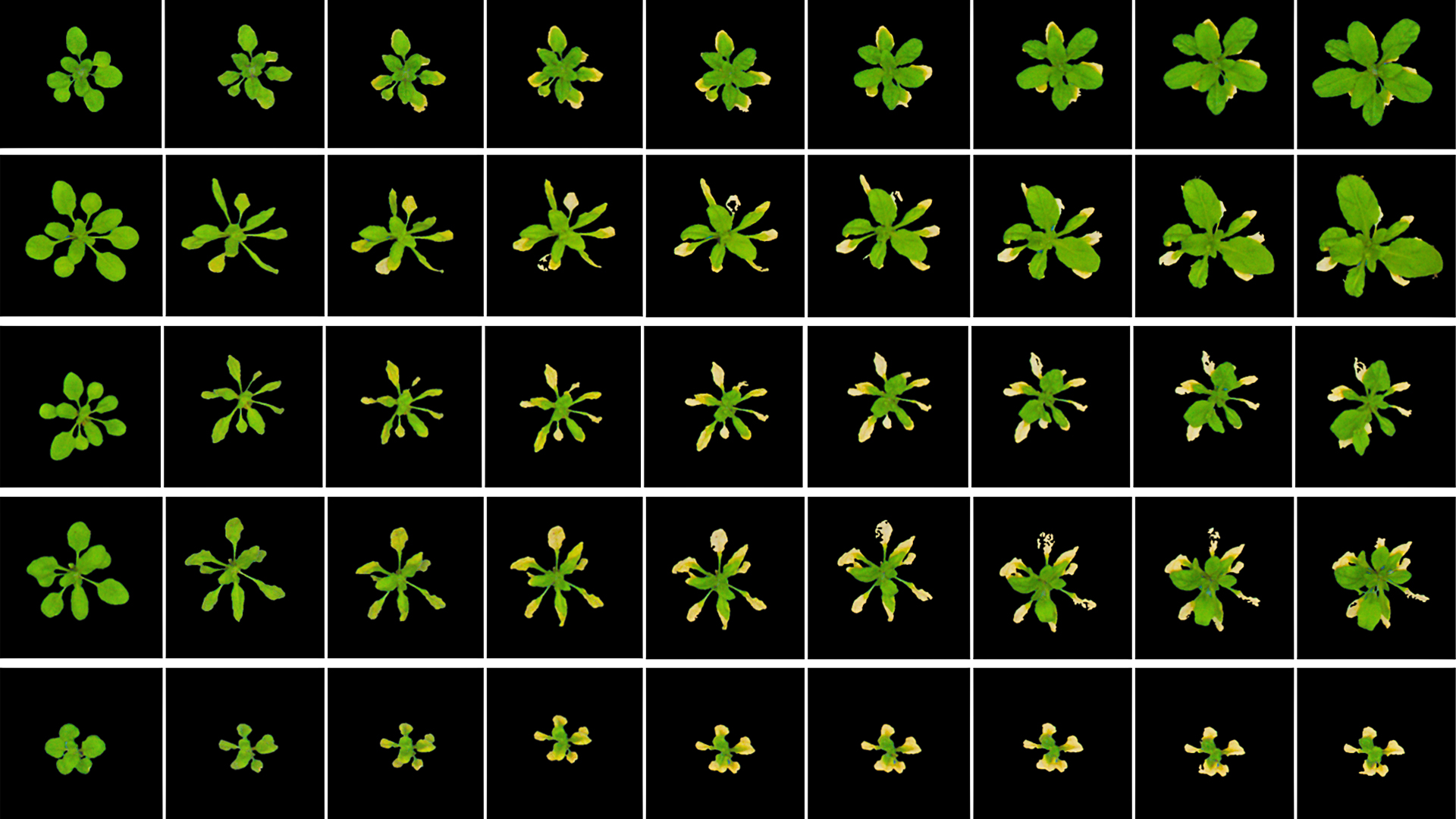
Plants cannot uproot and move to shelter as temperatures rise, meaning they must rely on internal mechanisms to survive heat stress. A specific chlorophyll-related enzyme has been shown to play a key role in increasing tolerance and protecting photosynthetic machinery in Arabidopsis thaliana plants exposed to high temperatures[1].
“When cells encounter stress, tiny condensates composed of proteins, RNA and metabolites quickly form. These ‘stress granules’ help protect key cellular components and mechanisms until the danger from stress has passed,” says Fatema Alquraish, who worked on the project under the supervision of Monika Chodasiewicz. Around five years ago, Chodasiewicz and colleagues from an international research team were the first to identify stress granules in chloroplasts (cpSGs) in Arabidopsis plants[2].
“It would take a huge amount of energy for a plant to protect all of its machinery and cellular components under heat stress,” continues Alquraish. “Forming stress granules rapidly in an emergency is a smart and selective way for the plant to shelter key components needed for the recovery phase after stress eases. The granules provide protection, and also allow the various components to ‘talk’ to one another and instigate repair and recovery processes.”
“This study was inspired by a simple question: do chloroplast stress granules merely appear during heat stress, or do they actively help plants tolerate heat? This led us to investigate specific proteins inside these granules and examine their roles,” says Chodasiewicz.
The team’s initial investigations into components of cpSGs led them to protochlorophyllide oxidoreductase C (PORC), a chlorophyll biosynthesis enzyme that is involved in chlorophyll production and photosynthesis, and is usually distributed evenly in the chloroplasts. The team noticed that, in response to elevated temperatures, PORC quickly localized into small, dot-like cpSGs as they formed.
In further experiments, the team showed that plants with higher PORC levels recovered photosynthesis faster and performed better under heat stress. Plants lacking PORC function were more sensitive to heat stress, suggesting that PORC helps preserve chloroplast function and protect the plant’s photosynthetic machinery during stressful conditions.
“We observed PORC granule formation under acute heat shock conditions as well as under milder, prolonged heat stress,” says Alquraish. “Under sudden extreme heat, cpSGs containing PORC formed within 30 minutes. Under sustained moderate heat, the granules developed more gradually. This suggests that the mechanism is flexible and can respond to the different types of thermal stress that plants may encounter in nature.”
The findings imply that cpSGs may represent an untapped strategy for improving plant resilience to heat stress, which is especially crucial for food security in arid countries such as Saudi Arabia.
“In future, it may be possible to tune cpSG formation, stability, or composition in crops, so they maintain photosynthesis more effectively during heat waves,” says Chodasiewicz. “We are interested in whether cpSG behavior can be genetically or chemically tuned to improve heat tolerance without compromising growth. We may also be able to enhance how plants reorganize chloroplast machinery in response to stress.”
Next steps for Chodasiewicz and her team include understanding the molecular rules that control cpSG assembly and disassembly, identifying additional protective components inside cpSGs, and testing whether similar mechanisms exist in different crop species.
Reference
- Alquraish, F., Maruri-López, I., Luzarowski, M., Hernández-Sánchez, I.E. & Chodasiewicz, M. Chloroplastic protein PORC undergoes heat-induced condensation and enhances thermotolerance in Arabidopsis. Plant Physiology, kiag220 (2026).| article
- Chodasiewicz, M., Sokolowska, E.M., Nelson-Dittrich, A.C., Masiuk, A., Beltran, J.C.M., Nelson, A.D.L., Skirycz, A. Identification and Characterization of the Heat-Induced Plastidial Stress Granules Reveal New Insight Into Arabidopsis Stress Response. Frontiers in Plant Science, 11:595792 (2020).| article
ABOUT THE AUTHOR
Fatema Alquraish
Visiting researcher

You might also like
Plant Science
Uncovering the secret to grass’s salty success

Plant Science
Tiny DNA fragments, big agricultural insights
Plant Science
Coevolution of the microbiome with its host plant supports environmental adaptation
Bioscience
Hidden flexibility in plant communication revealed

Plant Science
Reference genomes for rice’s wild relatives may boost future crops
Bioscience
Digging into the world of plant-growth-promoting microbes

Environmental Science and Engineering
Hydrogen storage solution could lie in lakes
Bioscience