

Earth Science and Engineering
When Earth breaks the “rules”
A record-setting earthquake in Myanmar challenges how scientists predict future seismic hazards.


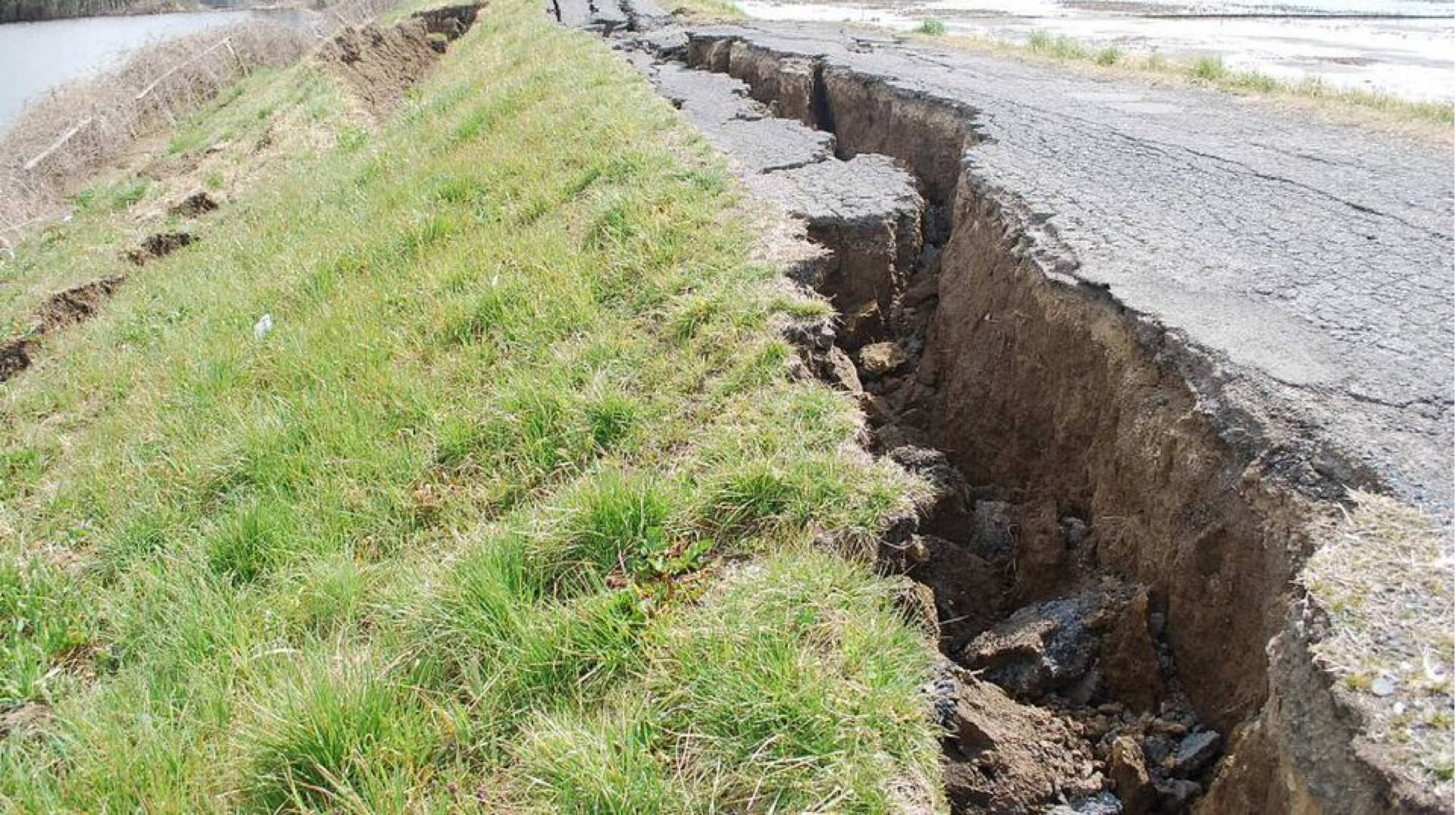
When a devastating magnitude 7.7 earthquake struck central Myanmar in March 2025, it didn’t just shake the ground — it challenged long-held assumptions in earthquake science itself.
Starting near the city of Mandalay, the rupture went right through what some may have considered a “safe” zone, a known seismic gap that had been quiet for nearly two centuries, and then continued for another 160 kilometers.
For decades, scientists have used the concept of seismic gaps, quiet sections along fault lines that have not broken in a long time, to estimate where large earthquakes are likely to occur. The central Sagaing Fault in Myanmar seemed to fit that model perfectly: a locked section that had not ruptured since 1839, bordered by segments that had already released their stress in earlier events.
But the 2025 earthquake defied that logic. Using a combination of satellite imaging, global seismic recordings, and computer simulations, KAUST researchers have now discovered that the rupture extended an astonishing 460 kilometers along the Sagaing Fault, one of the longest strike-slip ruptures ever observed on land[1].
Their analyses revealed a two-stage process. “The earthquake began with a slower bilateral rupture that spread north and south from near Mandalay,” explains Bo Li, a research scientist at KAUST and the study’s lead author. “Then, within about 20 seconds, it transitioned into a supershear rupture, moving faster than seismic shear waves, almost like a sonic boom in rock.”
This supershear behavior, sustained over more than 350 kilometers, generated intense ground shaking that was felt far beyond the fault itself. The earthquake caused widespread devastation across Myanmar and neighboring regions, including Bangkok, over 1,000 kilometers from the epicenter, and claimed more than 5,000 lives.
To understand how such an extraordinary rupture could happen, the team combined data from satellites with dynamic rupture simulations — supercomputer models that reproduce how faults break and slip in real-time. The simulations, run on KAUST’s Shaheen III supercomputer, revealed that the seismic gap boundary was not a strong mechanical barrier after all.
“The key was where the earthquake started,” Li says. “It nucleated far away from the gap boundary, in an area already primed for failure. By the time the rupture reached the boundary, it had enough momentum to burst right through.”
The findings challenge the reliability of using seismic gaps to estimate the size and location of future earthquakes, a cornerstone of standard seismic hazard assessment.
“Nature doesn’t always respect the boundaries we draw on maps,” says Professor Martin Mai, who supervised the research. “Our work shows that the dynamics of the earthquake rupture process, and how and where an earthquake starts, are just as important as the long-term stress history in determining how big an event becomes.”
The implications extend far beyond Myanmar. Other densely populated regions, such as the Marmara Sea fault zone near Istanbul or California’s San Andreas Fault, also feature long-standing seismic gaps. If ruptures can cascade across these zones, the resulting earthquakes could be far larger than currently estimated.
“Seismic gaps are a useful concept,” Li concludes, “but they’re not destiny. To better prepare for future earthquakes, we need a deeper understanding of the physics of how ruptures grow and connect. The 2025 Myanmar earthquake reminds us that the Earth still holds surprises.”
Reference
- Li, B., Jónsson, S., Suhendi, C., Liu, J., Li, D., Delorme, A., Klinger, Y., Mai, P.M. Seismic gap breached by the 2025 Mw 7.7 Mandalay (Myanmar) earthquake. Nature Geoscience (2025) | article
ABOUT THE AUTHOR
Bo Li
Research scientist

You might also like
Earth Science and Engineering
El Nino's long reach influences Red Sea salt balance
Earth Science and Engineering
Carbon sequestration for arid regions overcomes water constraints
Earth Science and Engineering
Asymmetric surface deformations reveal ongoing processes after earthquakes

Earth Science and Engineering
Depleted oil fields offer hydrogen storage sites
Earth Science and Engineering
Unearthing Arabia’s ancient foundations: New insights from the Ha’il terrane

Earth Science and Engineering
Sensing color cues to monitor coral health in the Red Sea
Earth Science and Engineering
Kahramanmaraş earthquake study showcases potential slip rate errors
Chemical Engineering