

Earth Science and Engineering
Unearthing Arabia’s ancient foundations: New insights from the Ha’il terrane
Beneath the deserts of Saudi Arabia lies a hidden record of Earth’s earliest continental history — a geological archive that could reshape our understanding of how Arabia was born.


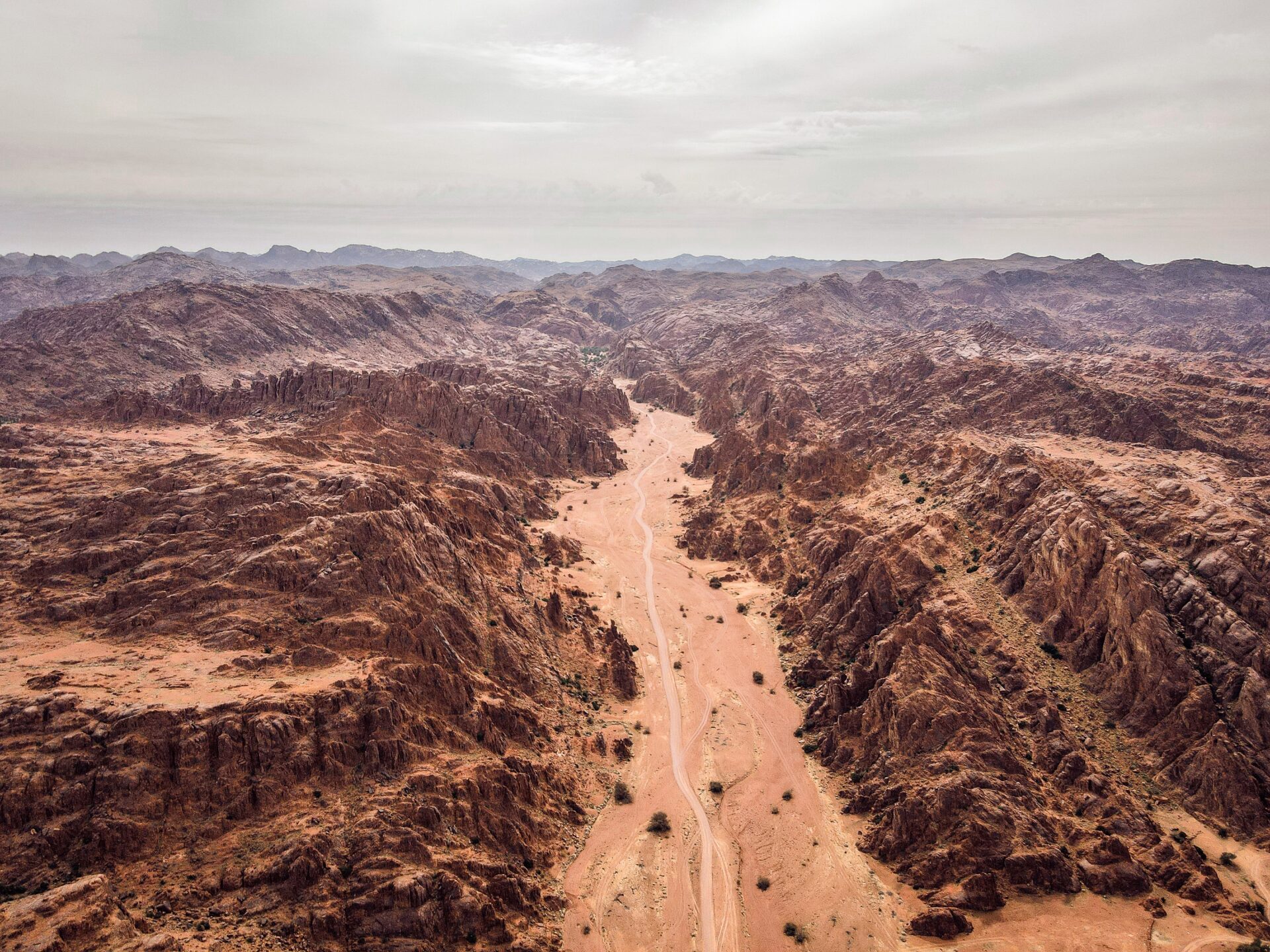
How and when did the foundations of the Arabian continent form? A new study has traced the geological history of the Ha’il region in northern Saudi Arabia back more than 640 million years, to a time when Arabia was still welded to the supercontinent Gondwana[1]. By analyzing ancient rocks buried beneath the desert, researchers at KAUST have uncovered critical new evidence of how this landmass evolved during one of Earth’s most dynamic tectonic transitions.
The Ha’il terrane, which is the focus of the study, is one of the crustal blocks that make up the Arabian Shield — a vast expanse of exposed Precambrian rock in western Saudi Arabia. Using advanced zircon U-Pb isotope dating and geochemical analysis, researchers traced the formation of rocks within the terrane during a dramatic geological transition that occurred between approximately 650 and 640 million years ago.
The results show that the Ha’il terrane first experienced intense mountain-building as microcrustal tectonic plates collided, followed by a shift to crustal stretching and magma intrusion. This transition coincided with the final stages of Gondwana’s assembly, when Arabia fused with Africa and India to form one of Earth’s great supercontinents.
“The rocks of the Ha’il terrane are like a time capsule,” says Om Prakash Pandey, the study’s lead author. “They capture the shift from a world of colliding continents to one where the crust began to relax and evolve into the stable platform we see today.”
Understanding how the Arabian Shield formed is vital for Saudi Arabia’s future. These ancient rocks host deposits of gold, copper, and rare-earth elements, which are key to the Kingdom’s Vision 2030 goals for resource diversification and sustainability.
By mapping how the Shield’s crust formed and transformed, scientists can better predict where valuable mineral resources are likely to occur and how the region’s geology influences modern landscapes.
“Each new study adds a missing piece to the geological puzzle of Arabia,” says Pandey. “This knowledge strengthens the foundation for informed exploration and scientific discovery.”
The discovery also has global implications for understanding the formation of continents. Isotopic analysis reveals that the Ha’il terrane was built from juvenile crust — new material sourced directly from Earth’s mantle rather than recycled older rocks. This positions the Arabian Shield as one of the largest preserved examples of newly formed continental crust anywhere on the planet.
“This research elegantly connects field data with chemical and isotopic evidence to tell the story of how continents grow,” says Froukje van der Zwan, a co-author of the study. “It highlights Saudi Arabia’s exceptional role in understanding the forces that built Earth’s continents.”
With still many opportunities to explore the Arabian Shield in greater detail, studies like this one are opening a deeper window into Saudi Arabia’s and Earth’s earliest geological history.
Reference
- Pandey, O.P., van der Zwan, F.M., Zivadinovic, I., Al Malallah, M.Y., Upadhyay, D., Chandra, J., Mezger, K. Geochemical and petrogenetic evolution of the basement rocks of the Ha’il terrane, Arabian Shield: A snapshot of the Gondwana assembly. Gondwana Research 149 (2026).| article
You might also like
Earth Science and Engineering
El Nino's long reach influences Red Sea salt balance
Earth Science and Engineering
Carbon sequestration for arid regions overcomes water constraints
Earth Science and Engineering
Asymmetric surface deformations reveal ongoing processes after earthquakes

Earth Science and Engineering
Depleted oil fields offer hydrogen storage sites
Earth Science and Engineering
When Earth breaks the “rules”
Earth Science and Engineering
Sensing color cues to monitor coral health in the Red Sea
Earth Science and Engineering
Kahramanmaraş earthquake study showcases potential slip rate errors
Chemical Engineering