

Bioengineering
New gene insertion method for plant engineering
By adapting a natural genetic element, researchers insert large genes into tobacco and rice.


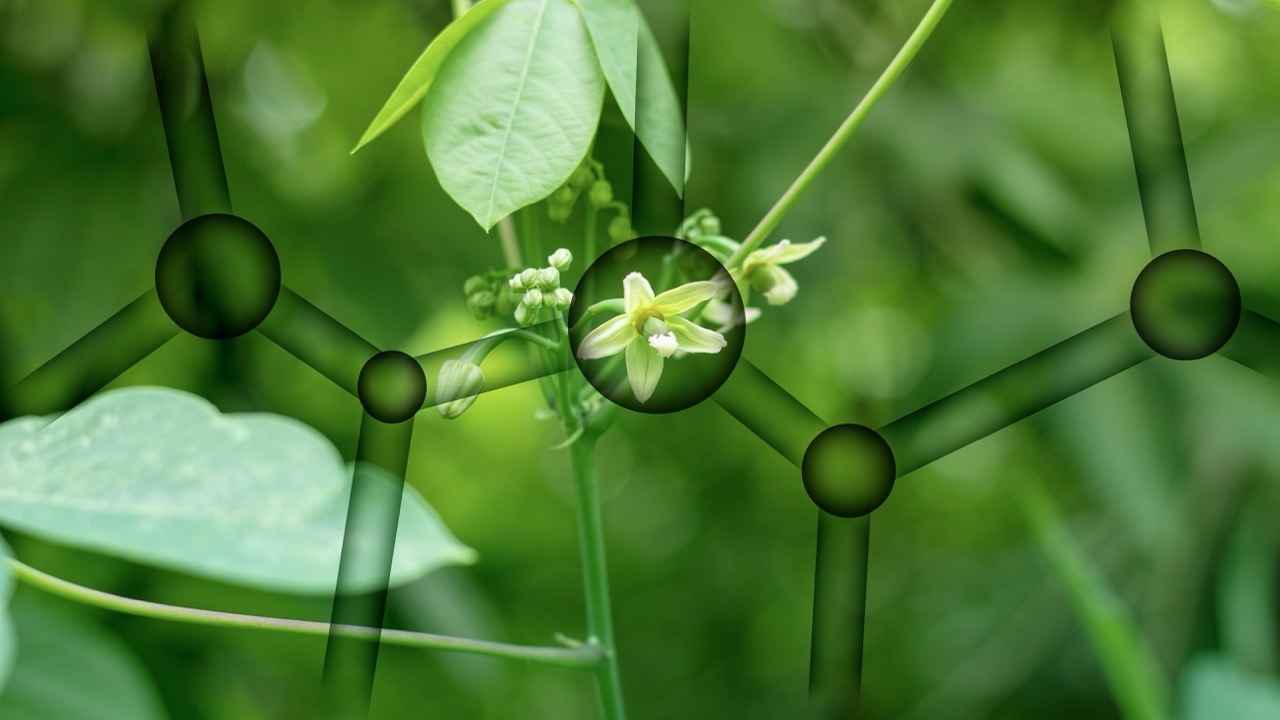
A new method for inserting multiple genes into plant genomes could overcome a key challenge in engineering plants to produce valuable compounds.
The technique repurposes naturally occurring mobile genetic elements known as R2 retrotransposons. These ancient genetic elements have spent millions of years copying themselves into the genomes of their hosts.
A team from KAUST has harnessed that natural copy-and-paste ability, directing it to write multi-kilobase stretches of DNA into safe-harbor sites — genomic regions where new DNA can be added without disrupting essential genes, while leaving the DNA double helix intact[1]. The system can insert genes directly this way, but the researchers also showed how to install recombinase landing pads — short docking sequences at which recombinase enzymes can then stitch in much larger pieces of DNA, enabling the stepwise assembly of complex biosynthetic pathways.
“We lay the groundwork for stacking multiple genes and assembling whole biosynthetic pathways in plants, the core capability needed to turn a plant into a programmable factory for high-value molecules,” says Magdy Mahfouz, head of the Laboratory for Genome Engineering and Synthetic Biology at KAUST, who led the study.
As a proof of concept, the team showed that the system works in tobacco, a standard laboratory plant, and rice, a staple crop that feeds billions. They inserted two test genes — one conferring antibiotic resistance, the other herbicide resistance — into a repetitive, reliably active stretch of the rice genome. The inserts landed successfully in up to 17% of treated rice cells clusters, providing proof of principle that the system can introduce agronomically relevant genes into the rice genome.
The genome-editing technique addresses a key limitation of existing tools, explains Zahir Ali, a research scientist in Mahfouz’s lab and co-first author of the study. CRISPR, the gene-editing system that has transformed the field, excels at making precise cuts and small genetic changes, but struggles to insert large DNA sequences efficiently. The R2 system writes DNA from an RNA template and integrates it into the target locus without requiring a conventional DNA double-strand break, providing a fundamentally different route to gene addition.
R2-mediated insertion had previously been shown in mammalian cells, but not in plants. “This is the first demonstration of R2-mediated gene addition in plant systems,” Ali says.
The broader goal is to turn crop species into practical manufacturing platforms for drugs, industrial enzymes, and other high-value compounds.
“Plants are a vastly underused chassis for synthetic biology,” says Haroon Butt, another research scientist in Mahfouz’s lab, and co-first author of the study. Powered by sunlight, they can be grown at relatively low cost and can produce complex molecules that are difficult or costly to manufacture in microbial or animal-cell systems.
A reliable way to insert whole genes and stack them into biosynthetic pathways could make plant-based manufacturing more practical. However, the researchers have yet to show that the inserted genes can be stably inherited by a plant’s offspring — a prerequisite for agricultural applications and large-scale production.
Once this and other challenges are overcome, the approach could have applications in both industrial manufacturing and food security. “It adds a genuinely new tool to the global genome-writing toolkit,” Mahfouz says.
Reference
- Ali, Z., Butt, H., Alghamdi, R., Moreno Ramirez, J. L. & Mahfouz, M. Efficient site-specific gene addition using R2 retrotransposons in tobacco and rice. Nature Biotechnology (2026).| article.
ABOUT THE AUTHOR
Zahir Ali & Haroon Butt
Research scientists

You might also like
Bioengineering
Nanoscaffolds to support the fight against superbugs

Bioengineering
Smaller and sharper: Compact CRISPR scissors cut with precision

Bioengineering
Intelligent vision chip offers brainlike processing

Bioengineering
Bio-inspired network structures for next-generation AI

Bioengineering
Self-aware biosensors boost digital health monitoring
Bioengineering
Algae and the chocolate factory

Bioengineering
Smart patch detects allergies before symptoms strike
Bioengineering