

Bioengineering
Nanoscaffolds to support the fight against superbugs
A virus-based scaffolding platform that carries antimicrobial peptides successfully kills multidrug-resistant pathogens in laboratory tests.


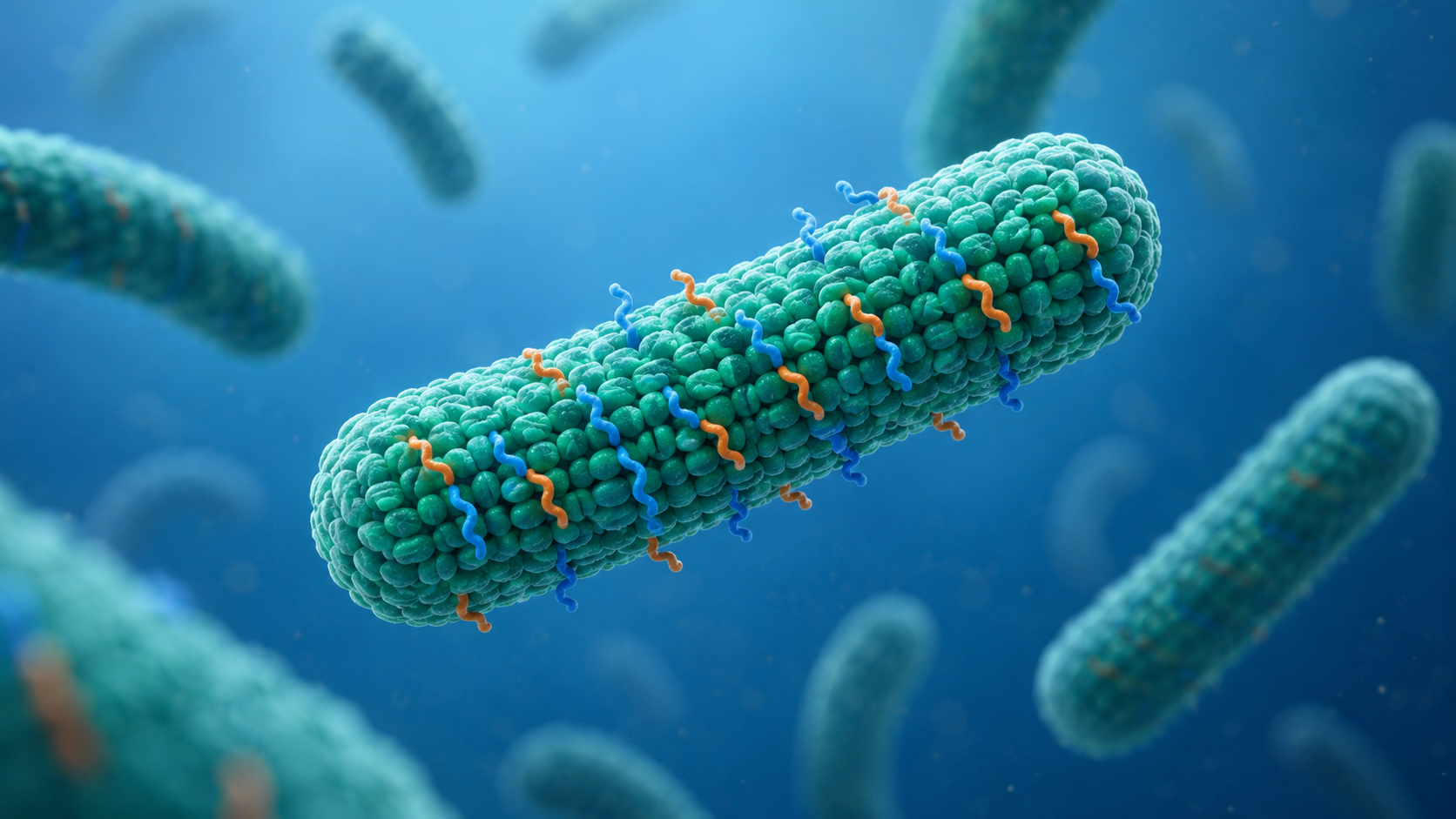
A potato virus, antimicrobial peptides, and a plant-based “drug factory” have been brought together to fight superbugs. The novel drug-delivery platform developed by the KAUST team comprises a viral scaffold capable of carrying antimicrobial peptides that selectively attack bacterial cells while sparing human cells[1].
Multidrug-resistant (MDR) pathogens pose significant threats: estimates by the World Health Organization (WHO) suggest these superbugs could kill 39 million people worldwide over the next 25 years. Antimicrobial peptides can kill MDR pathogens, but WHO has called for new strategies to improve their effectiveness in the body.
“Lots of antimicrobial peptides must be present in the same place at the same time to successfully kill bacteria. However, free antimicrobial peptides rapidly degrade in the body and administering them at high doses is toxic to humans,” says Ahmed Ghouneimy, who worked on the project with KAUST colleagues under the supervision of Magdy Mahfouz. “By arranging hundreds of peptides on a viral scaffold, we’ve created a concentrated payload that strikes the bacterial membrane simultaneously at multiple points, dramatically increasing potency.”
The team turned a harmless plant virus (Potato Virus X) into a nanoscale construction platform, or “nanoscaffold”. The researchers genetically modified the virus so that its surface displayed a protein called SpyCatcher. Separately, they produced antimicrobial peptides carrying a complementary molecular tag called SpyTag. When mixed, SpyTag and SpyCatcher form a strong covalent bond, firmly attaching the peptides onto the virus surface.
“Essentially, it’s a molecular rod decorated with hundreds of tiny antibacterial weapons,” says Ghouneimy. “These rod-based peptide grids, or RPGs, could be programmed to host multiple different peptides or therapeutic molecules.”
In tests, the RPGs eradicated several MDR pathogens within 10 to 30 minutes, including E. coli, MRSA, and P. aeruginosa. This outpaced last-resort clinical antibiotics such as vancomycin, tigecycline and cefiderocol, which need four hours or more for comparable killing.
RPGs enhance the efficacy of the antimicrobial peptides by more than 9,700-fold compared to free peptides alone. The scaffold also protects peptides from biological environments including serum and salts, and the system displays low toxicity to human cells. The researchers trialed an RPG displaying multiple peptide variants; this enabled enhanced broad-spectrum killing of pathogens even at low doses.
Next, the team needed a rapid, cost-effective way to manufacture large quantities of RPGs. Rather than taking a conventional pharmaceutical production route, which presents significant manufacturing challenges, the team hijacked the molecular machinery of Nicotiana benthamiana plants to synthesize the modified form of the potato virus.
“The plants act as miniature biological factories that convert sunlight, water, and CO2 into highly sophisticated nanomaterials,” says Ghouneimy. “After around two weeks, the plants had manufactured large quantities of the nanoscaffolds, offering a unique way forward for scalable production.”
“We plan to evaluate the platform in animal models of infection, where we are particularly interested in understanding pharmacokinetics, biodistribution, immune responses, and therapeutic efficacy,” says Mahfouz. “We’re also engineering RPGs to make the system effective against biofilms, which are responsible for 65 percent of all microbial illnesses.”
The team plans to expand their concept beyond antimicrobial peptides. The ability to organize bioactive molecules on programmable plant-virus scaffolds could have applications in infectious diseases, immunotherapy, and targeted drug delivery.
Reference
- Ghouneimy, A., Chaudhary, S., Tehseen, M., Saleh, A., Serag, M., Ayach, M., Bukhari, E., Masood, M., Sakashita, K., Hong, P-Y., Habuchi, S., Hamdan, S.M. & Mahfouz, M. Multivalent display of antimicrobial peptides on plant virus scaffolds enhances killing of drug-resistant bacteria. ACS Nano (2026).| article.
ABOUT THE AUTHOR
Ahmed Ghouneimy
Ph.D. student

You might also like
Bioengineering
New gene insertion method for plant engineering

Bioengineering
Smaller and sharper: Compact CRISPR scissors cut with precision

Bioengineering
Intelligent vision chip offers brainlike processing

Bioengineering
Bio-inspired network structures for next-generation AI

Bioengineering
Self-aware biosensors boost digital health monitoring
Bioengineering
Algae and the chocolate factory

Bioengineering
Smart patch detects allergies before symptoms strike
Bioengineering