

Environmental Science and Engineering
Climate action needs a tree change
Despite scientific debate, protecting and restoring natural forests is essential for global climate mitigation and adaptation.


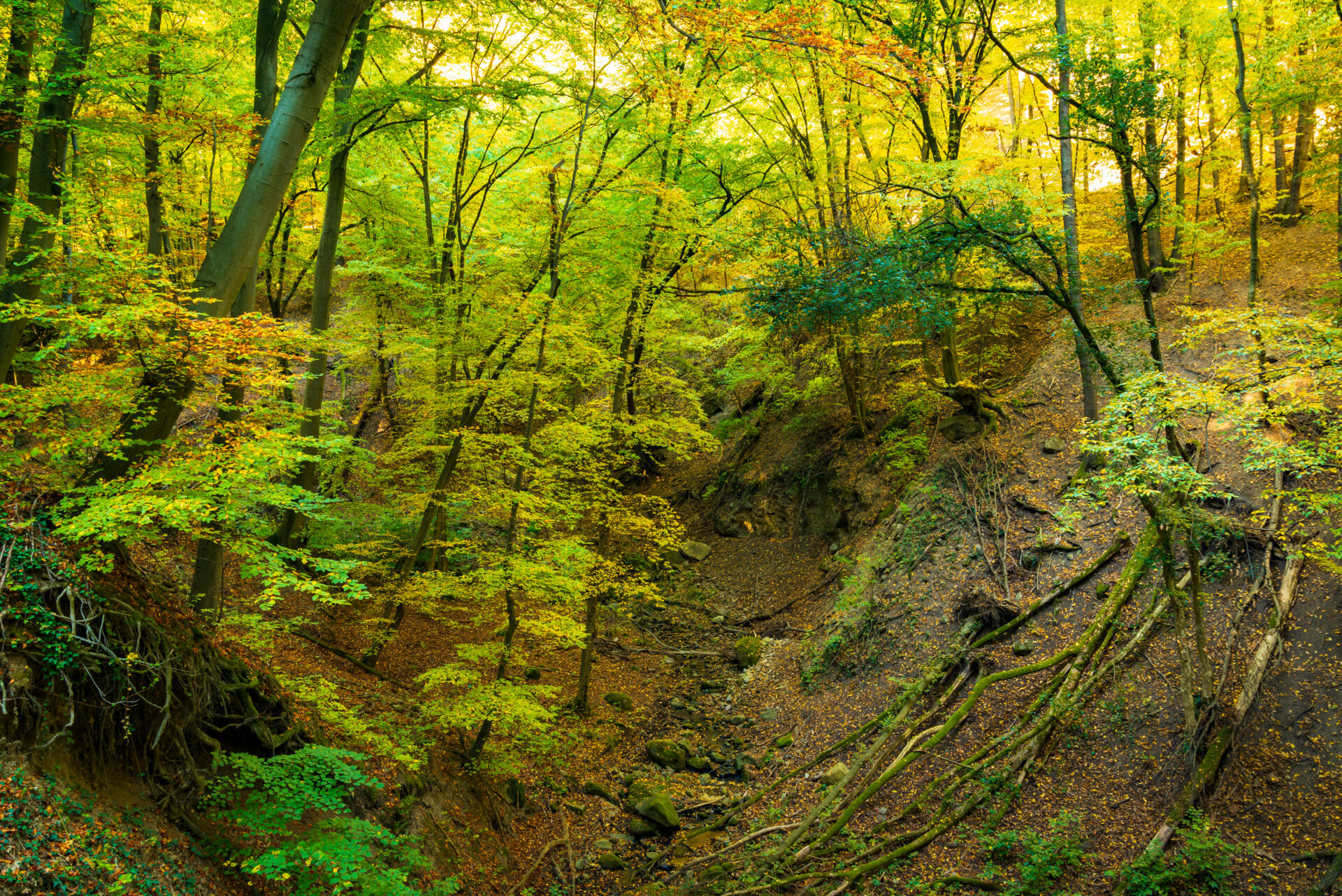
Over the last decade, research suggesting that forests can have warming impacts in certain regions of the globe sparked debate about their role in climate. Forest conservation and restoration projects have, at times, been paused over concerns that they could contribute to climate change rather than counteract it.
However, recent research takes a global perspective to help navigate past the controversy, showing forests’ vital roles in local climate adaptation. KAUST ecologist, Thomas Crowther, has led an international team that reviewed evidence and found that, when each forest climate impact study is considered in context, native forest protection and regeneration is overwhelmingly positive for humanity and the planet[1].
Location, location
“Our study was initiated by colleagues in the UK government who manage an international conservation and development budget,” says Crowther, whose research focuses on links between human wellbeing and global biodiversity. “The question over whether forests have a warming or a cooling effect was blocking their work.”
To resolve apparently conflicting research findings about forests’ impact on local climate, the team considered the locations the studies were conducted. “When we take that perspective, the controversy washes away and the evidence is crystal clear,” Crowther says.
The analysis showed that local warming was restricted to the snowy boreal forests of the Northern Hemisphere’s high latitudes. This local warming effect — which is beneficial for biodiversity and people in these ecosystems — stems from the way forests can absorb the warmth in sunlight, Crowther explains.
“By absorbing carbon, forests have a cooling impact, but in boreal forests, that effect can be offset by the warming of the Sun’s energy being absorbed,” Crowther notes. Compared to open, highly reflective snow-covered landscapes, dark forests absorb more solar energy and warm the local climate.
“We see a very clear pattern, particularly at the local scale, that forests in freezing conditions do have a local warming impact, which is beneficial to the people and species living there,” Crowther says.
“In hot locations, forests have an equally important cooling effect, saving lives and livelihoods in these regions in the face of climate change,” Crowther adds. “The amazing potential of forest ecosystems to buffer the effects of climate means that they’re beneficial wherever they grow naturally.”
Flow-on benefits
Forests’ local climate-regulating impacts extend beyond temperature. The team also weighed the evidence on water flows through forested landscapes.
“Forests slow down water cycling, which can trap moisture in the ecosystem and is very good for those ecosystems’ survival,” Crowther explains. “This effect can be really helpful in wet regions, where slowed water flows can prevent flooding,” he says.
However, he warned that the slowed water cycling can also be an important planning consideration in arid areas. “In dryland regions, living downhill from a forest can limit water runoff towards your community,” Crowther says.
For a country such as Saudi Arabia, the low moisture availability is a limiting factor in forest growth. “But there are huge areas of this country where trees naturally exist, for example, river basins and wadis with higher moisture availability,” Crowther says. “Those areas are incredible opportunities for forest regeneration, where buffering temperatures and retaining more moisture can be really valuable for local livelihoods and food production.”
Pinpointing the places where forests naturally grow is a major focus of Crowther’s research. “Our first model, published in 2019, was the basis for the United Nations’ Trillion Tree campaign, which inspired international forest restoration efforts including the Saudi Green Initiative,” Crowther explains. “Those original models have since been refined and we now can show accurately where forests would have enough access to moisture, and where reforestation would provide climate benefits.”
A world in balance
As Crowther’s models highlight, the natural world contains a diversity of ecosystems far beyond forests. Reforestation efforts must reflect this diversity, Crowther says. “Forest benefits are most consistent when they grow in places where they would naturally exist. When they are planted in unnatural areas, their effects can be highly unpredictable and often damaging.”
One place to focus forest conservation and restoration efforts is the hot tropics, where biodiversity, carbon storage and livelihoods depend most closely on natural forest ecosystems, Crowther points out. “At the same time, I firmly consider that there’s no location on the planet where healthy biodiversity isn’t beneficial for people,” he adds. “Where peatlands are naturally found, you want healthy peatland ecosystems there. In grassland regions, you want grassland biodiversity. I want a world where everyone, everywhere can be empowered to protect their local nature to improve livelihoods and wellbeing.”
Striking the right balance between native habitat and agriculture is Crowther’s current research focus. “It is about finding the tipping points between nature and food production,” Crowther says. As land is cleared for farming, there is a point beyond which food production declines, as the spillover benefits of natural ecosystems — such as climate regulation, soil fertility and pollination — are lost, he notes. “Our current research aims to calculate, for every country, where that balance lies.”
Reference
- Reek, J.E., Zohner, C.M., Smith, G.R., Cook-Patton, S.C., De Frenne, P., D’Odorico, P., Floriancic, M.G., Jackson, R.B., Jones, J.A., Kirchner, J.W., Laguë, M., Liang, Y., Masuda, Y.J., McDonald, R.I., Parsons,L.A., Probst, B.S., Spector, J.T., West, T.A.P., Wolff, N.H., Zellweger, F., Crowther, T.W. More than mitigation: The role of forests in climate adaptation. Science 391, 669 (20).| article.
ABOUT THE AUTHOR
Thomas Crowther
Professor

You might also like

Environmental Science and Engineering
Soil biodiversity is an overlooked frontline of disease prevention

Environmental Science and Engineering
Soil microbes are source of plastic-degrading enzymes

Environmental Science and Engineering
Bringing together the tools to harness the potential of microbial diversity

Chemical Engineering
Natural solvents enable fully bio-based membranes

Environmental Science and Engineering
Plant diversity reduces the impacts of grazing pressure in drylands

Environmental Science and Engineering
Water-repelling surfaces reveal surprising charging effects

Environmental Science and Engineering
Ultrathin water repellent membrane advances desalination

Environmental Science and Engineering