

Environmental Science and Engineering
Plant diversity reduces the impacts of grazing pressure in drylands
A global field survey of dryland sites shows that plant species richness is the strongest predictor of resistance to overgrazing.


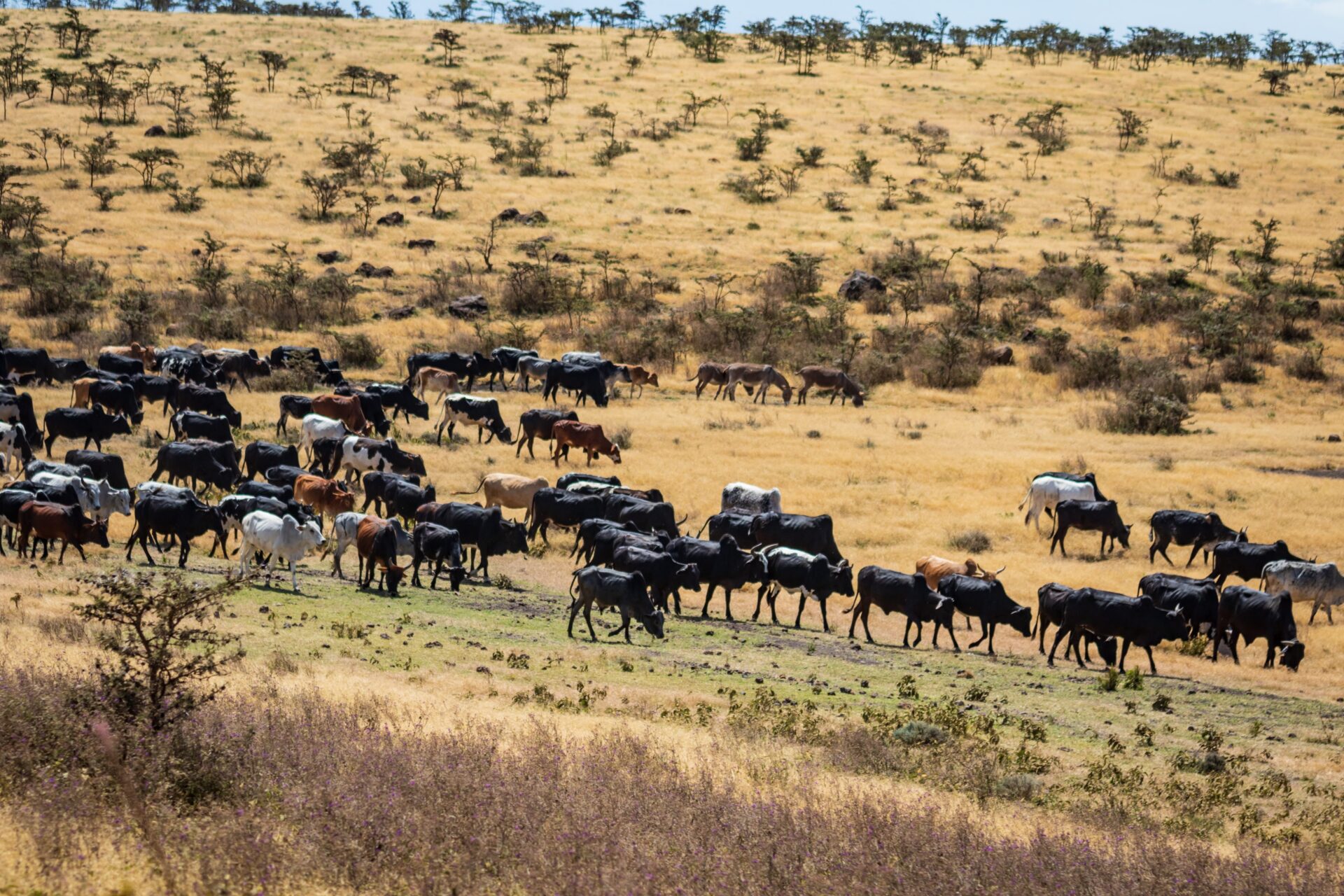
Plant diversity is the strongest predictor of resistance to grazing pressure in dryland ecosystems, according to a global-scale study by an international team led by KAUST[1]. This finding provides a scientific basis for developing and implementing more sustainable rangeland management strategies.
This insight is critical for global drylands, which support about half of the world’s livestock production and sustain the livelihoods of more than one billion people. Despite their vital role, these ecosystems face intense pressures and are highly vulnerable to desertification.
“Current trends indicate a global increase in meat consumption and livestock production, and so the pressures on dryland rangelands will also increase,” says Lucio Biancari, who worked on the study under the supervision of Fernando T. Maestre. “We already know from previous studies that ecosystems don’t all respond to grazing in the same way. In some dryland areas, vegetation declines rapidly as grazing intensifies, while in others, ecosystems remain surprisingly resistant.”
However, most previous work has been conducted at local or regional scales, making it difficult to identify general patterns or underlying mechanisms for these contrasting responses, notes Biancari. To examine these patterns on a global scale, an international team coordinated by Maestre conducted an extensive survey. The researchers analyzed data from 73 dryland sites across 25 countries to evaluate how climate, soil, vegetation and grazing-related factors influence ecosystem resistance.
They found that increased grazing pressure led to a decline in vegetation cover at 80 percent of the 73 sites. On a global scale, the average effect of increased grazing was a 35 percent reduction in vegetation cover. Plant species richness emerged as the strongest predictor of ecosystem resistance, with a higher number of species associated with lower vegetation cover loss.
“Sustainable grazing cannot rely only on reducing animal numbers, particularly in ecosystems with a long history of grazing such as Saudi Arabia,” says Biancari. “While stocking rates clearly matter, our results highlight the importance of management approaches that actively promote and protect plant diversity. Conserving plant diversity is not just a conservation objective; it is central to maintaining ecosystem functioning as land-use pressure increases.”
“Our results show that diversity enhances resistance not just because some plant species can replace others, but because diverse plant communities contain complementary strategies to boost resilience,” explains Biancari.
For example, different species exhibit variation in growth form, palatability, rooting depth, or chemical defenses, and collectively these features help the vegetation to withstand grazing impacts. Simplified plant communities may therefore be more vulnerable to degradation than more diverse communities.
The team highlights that management frameworks that support diverse plant communities are more likely to enhance long-term resistance to grazing, helping drylands remain productive while reducing the risk of degradation.
“This is particularly relevant for hyper-arid and arid systems like those in Saudi Arabia, where rangelands represent the most extensive land use across the country,” says Maestre. “We are now conducting a large, standardized field survey across major ecosystems in Saudi Arabia to understand their responses to grazing pressure. The results will help inform evidence-based grazing management and restoration strategies in the Kingdom.”
Reference
- Biancari, L., Oñatibia, G.R., Le Bagousse-Pinguet, Y., Gross, N., Yahdjian, L., Aguiar, M.R., Saiz, H., Eldridge, D.J., Valencia, E., Moreira, X., Ochoa, V., Gozalo, B., Asensio, S., Plaza, C., Guirado, E., García-Gómez, M., Gaitán, J.J., Martínez-Valderrama, J., Mendoza, B.J. & Maestre, F.T. Plant diversity enhances ecosystem resistance to increasing grazing pressure in global drylands. Nature Ecology & Evolution 10, 258–266 (2026).| article.
ABOUT THE AUTHOR
Lucio Biancari
Postdoc

You might also like
Environmental Science and Engineering
Soil biodiversity is an overlooked frontline of disease prevention

Environmental Science and Engineering
Soil microbes are source of plastic-degrading enzymes

Environmental Science and Engineering
Bringing together the tools to harness the potential of microbial diversity
Environmental Science and Engineering
Climate action needs a tree change

Chemical Engineering
Natural solvents enable fully bio-based membranes
Environmental Science and Engineering
Water-repelling surfaces reveal surprising charging effects

Environmental Science and Engineering
Ultrathin water repellent membrane advances desalination

Environmental Science and Engineering