

Chemistry
Disruptive smart materials flex with real world potential
Reactive materials that light up, move or change shape in response to external molecular stimuli are poised to disrupt a raft of technologies.


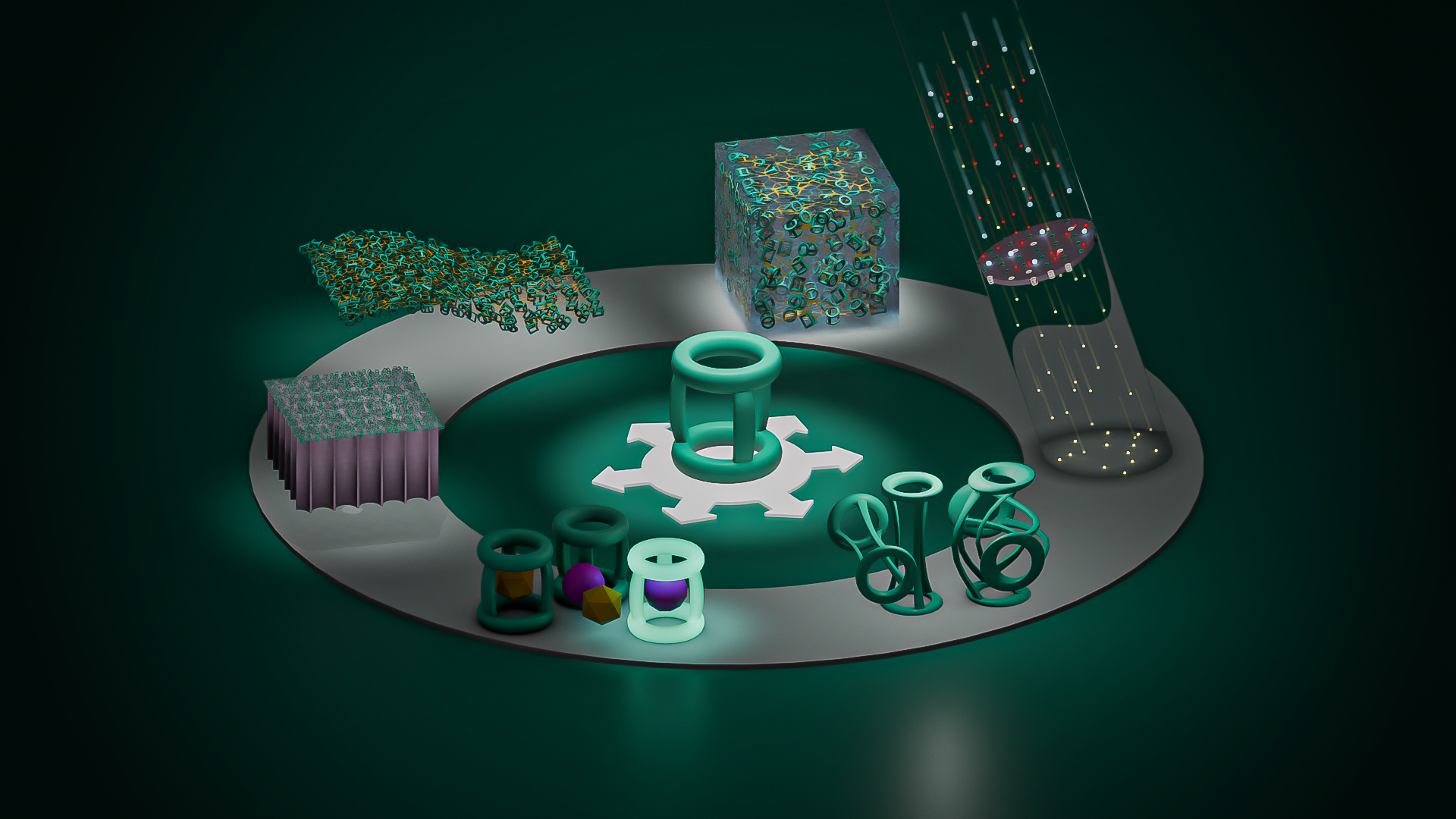
From soft robotic fingers that can gently grasp and release delicate objects on demand to luminescent water quality monitors that dim to signal the presence of contaminants, numerous smart devices could be derived from a rapidly developing new family of stimuli-responsive molecular materials called porous cages.
“These stimuli-responsive molecular entities enable us to make smart materials that can automatically respond to cues or changes in their environment,” says Niveen Khashab from the Smart Hybrid Materials Lab at KAUST. As a pioneer in stimuli-responsive porous cage research, Khashab was invited to share her expert perspective on this rapidly emerging field[1].
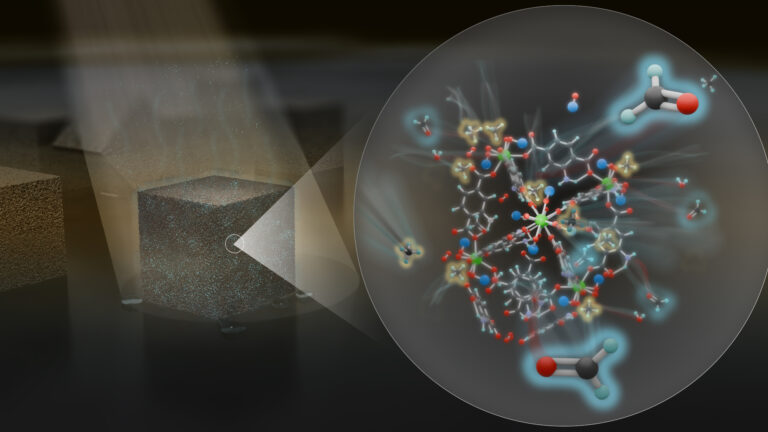
“Porous cages are discrete, hollow molecular constructs that can accept small molecule ‘guests’ within the cavity at their core,” she explains. Hosting a guest molecule triggers structural and property changes in the porous cage, enabling useful functions such as movement or color change. “Our key contribution to the field has been the design and synthesis of molecular hosts capable of recognizing a wide range of guest molecules, and thus responding to changes at the molecular level.”
Khashab adds that this work has led to smart gels and pastes with applications ranging from smart agriculture to wound healing.
Unlike other guest-hosting materials such as metal-organic frameworks (MOFs), a key advantage of porous cages is that they dissolve easily in organic solvents, which enables their ready incorporation into various devices. In the dissolved state, porous cages can be coated onto surfaces, mixed into other materials such as plastics, or directly cross-linked to create smart materials with a dynamic, stimuli-responsive coating or core.
The potential to develop sophisticated devices from such materials drew Khashab’s two co-authors, postdoctoral researchers Peiren Liu and Fang Fang, to join her lab. Fang says: “What intrigued both of us was the possibility of integrating molecular cage host–guest systems with polymers, thereby translating molecular-level responsiveness into tangible, macroscopic functional behaviors.”
Liu and Fang co-led the lab work on the team’s latest contribution to the field, novel urea porous cages, which they combined with a polymer to create a stimuli-responsive film. When exposed to organic vapors, the two ends of the film curled up toward each other as guest molecules from the vapor were absorbed by the film. The team used this material to build soft robotic fingers that grasp and release objects in response to specific vapor cues.
The KAUST team’s perspective article highlighted advances from across the field. These developments included porous cage membranes with switchable permeability for chemical purification applications, as well as porous cages decorated with a light-emitting sidechain that underwent a shift in light emission along with the absorption of specific guest molecules — such as common contaminants in water supplies.
“The potential applications of porous cages are diverse,” Liu says. “I think the most exciting real-world uses for such materials lie in soft robotics — particularly in developing artificial muscles — and in wearable devices for environmental monitoring and healthcare.”
Reference
- Liu, P., Fang, F., Khashab, N. M. Porous cages: From molecular host-guest interactions to macroscopic smart materials. Matter 8, 102130 (2025). | article.
You might also like
Chemistry
Opening a window on architectural nano-design
Bioscience
Multi-enzyme pathway delivered into living cells
Chemical Engineering
Natural solvents enable fully bio-based membranes
Chemistry
Turning infrared solar photons into hydrogen fuel
Applied Physics
Natural polymer boosts solar cells
Chemistry
Catalysts provide the right pathway to green energy
Chemistry
Hollow molecules offer sustainable hydrocarbon separation
Chemistry