

Statistics
Internet searches offer early warnings of disease outbreaks
Mining Google trends using a real-time tracker could aid response to mosquito-borne diseases worldwide.


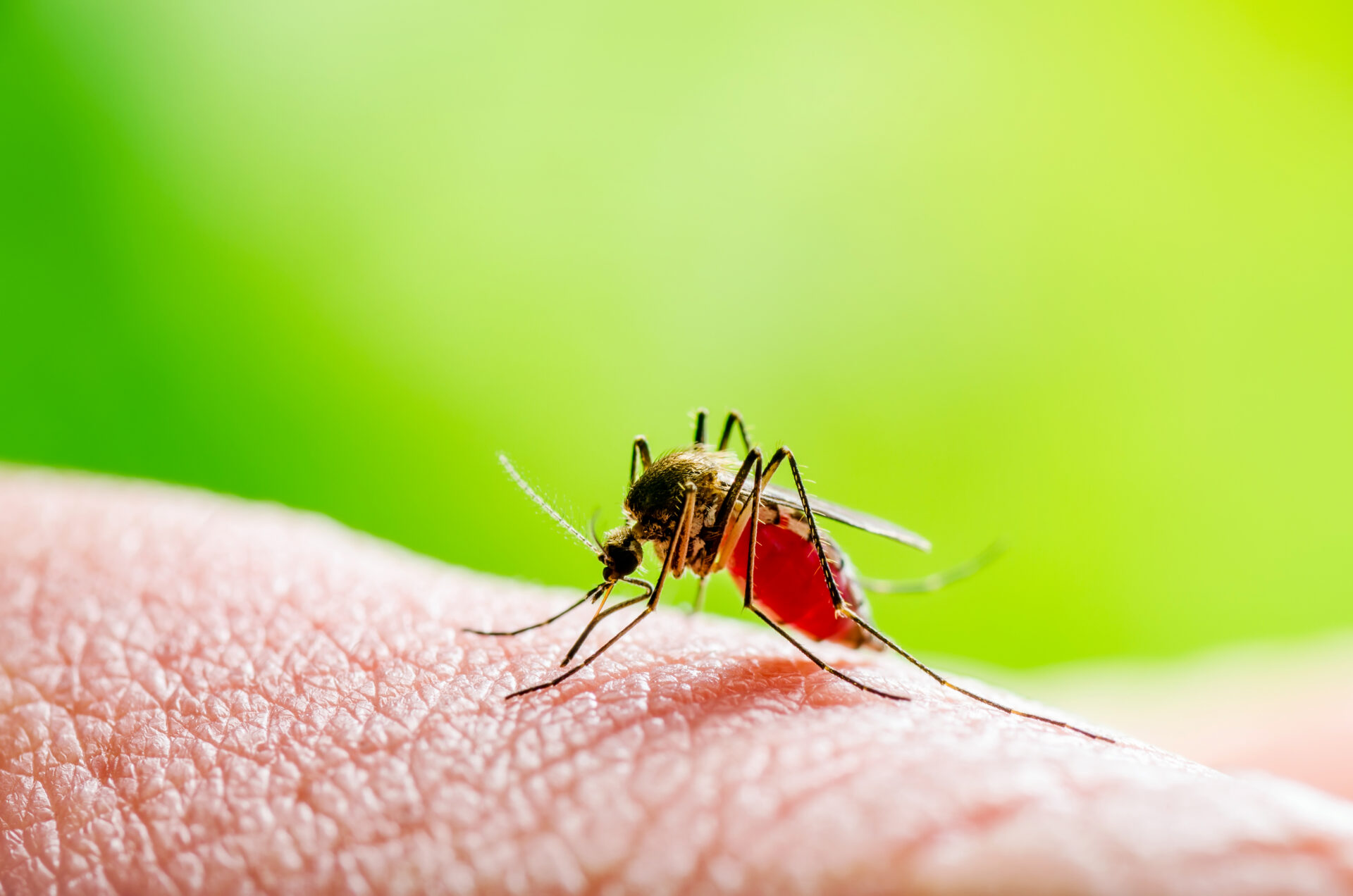
When infectious diseases spread, the first warning signs may not come from hospitals or doctor reports but from Google searches among worried residents.
A KAUST-led study, focusing on a 2024 outbreak of dengue fever in Brazil, has found that internet searches for disease-related terms can provide faster and sometimes more accurate estimates of case numbers than official surveillance reports[1].
The research has prompted the development of a website that incorporates Google search activity across Brazil’s 26 states and federal districts to support timely decisions and resource allocation. It also provides proof-of-concept of how digital data can help health officials track outbreaks in real time.
“It is urgent that we take action and work together in order to reduce the impacts associated with dengue and other mosquito-borne diseases — and one way to do it is through the development of these kinds of disease surveillance systems,” says data scientist, Paula Moraga, who led the study.
Moraga and her team, in collaboration with statisticians from Brazil, evaluated several prediction models used for tracking dengue transmission. The researchers compared traditional epidemiological approaches, which predict cases on the basis of recent trends in confirmed weekly case counts, with models incorporating search data from Google Trends, a tool that analyzes the popularity of different search queries.
The difference was striking. In most Brazilian states, the simplest model — built only on search queries for the word ‘dengue’ — proved more accurate than traditional approaches: errors in estimating weekly cases were consistently smaller, and the search-based model captured the timing of surges more precisely.
The study demonstrates how digital information sources — such as internet search terms, chatbot interactions, and social media posts — can complement traditional health surveillance methods, notes Moraga, who won the 2023 Letten Prize for her work developing statistical methods for public health surveillance.
“This information is not produced for epidemiological research, but we can use it to understand disease activity levels in real time,” she explains.
The search-based model was especially valuable in the southeastern state of Rio de Janeiro, where traditional surveillance models did not capture this data, yet the Google-based approach could produce timely estimates that were adopted by the Ministry of Health.
Such discrepancies underscore the value of ‘nowcasting’ — estimating the current state of an outbreak when official statistics are delayed or incomplete. For diseases like dengue, which can overwhelm hospitals in a matter of weeks, even modest time gains can shape how health authorities deploy doctors, hospital beds, and mosquito-control campaigns.
“Nowcasting methods allow us to understand current disease activity levels and make better informed decisions,” says study co-author Yang Xiao, a member of Moraga’s GeoHealth research group at KAUST.
Furthermore, through the creation of Dengue Tracker, an online platform publishing weekly forecasts and interactive maps for every Brazilian state, the research has been put directly into practice: “These reports assisted policy makers and the general public in understanding dengue levels and guide their decisions,” Xiao says.
Google queries are not a substitute for robust surveillance, emphasizes Moraga, especially in areas with limited internet access. However, she says that digital signals provide a valuable complement — one that may be especially useful in the Gulf region, where mosquito-borne diseases such as dengue, malaria and Rift Valley fever remain persistent threats.
Reference
- Xiao, Y., Soares, G., Bastos, L., Izbicki, R. & Moraga, P. Dengue nowcasting in Brazil by combining official surveillance data and Google Trends information. PLoS Neglected Tropical Diseases 19, e0012501 (2025).| article.
ABOUT THE AUTHOR
Yang Xiao
Ph.D. student

You might also like

Statistics
Smoothing the math of spatial networks

Statistics
Checking your assumptions

Statistics
Joining the dots for better health surveillance

Statistics
Easing the generation and storage of climate data

Statistics
A high-resolution boost for global climate modeling

Applied Mathematics and Computational Sciences
Finer forecasting to improve public health planning

Bioengineering
Shuffling the deck for privacy

Bioengineering